
BodyStorming
Bodystorming is an idea-generating process that Culture Mill uses when creating a new project or working through a new idea. Eclipse is rooted in somatic practices that center the knowledge of the body; bodystorming is one of these practices which both allows knowledge held by the body to more easily surface as well as disrupts the primacy of language in the collaborative production of knowledge. “Somatic” refers to a focus on bodily sensations, experiences, and movements. Somatic practices involve a heightened awareness of bodily sensations and movements as a way to tap into deeper levels of understanding, expression, and creativity. When Culture Mill mentions “somatic practice,” they are referring to activities or exercises that involve paying attention to bodily sensations and movements to inform their creative process. It’s a way of connecting with the body’s wisdom and incorporating it into their artistic work.
CPA’s archivist, Taylor, sat down with Tommy and Murielle to learn about how bodystorming informs the artists’ practice. This conversation took place on April 11, 2022. The following excerpt has been lightly edited for clarity.
—
Taylor: Could you explain what bodystorming is and how you used in in the conceptualization of Eclipse?
Murielle: When we bodystorm, we step away from the brainstorming and we center our thinking through physical thinking first, and then go to the words. It is not like the body versus language, rather, it is that language exists within the body. If we don’t go through the body-first experience, there are layers of knowing that remain uncovered. Socially, many of us have been conditioned to prioritize language. So there is already an existing hierarchy in the way we learn and communicate. But when we go into our bodies first and then learn language from the body, there are different layers that can be unearthed.
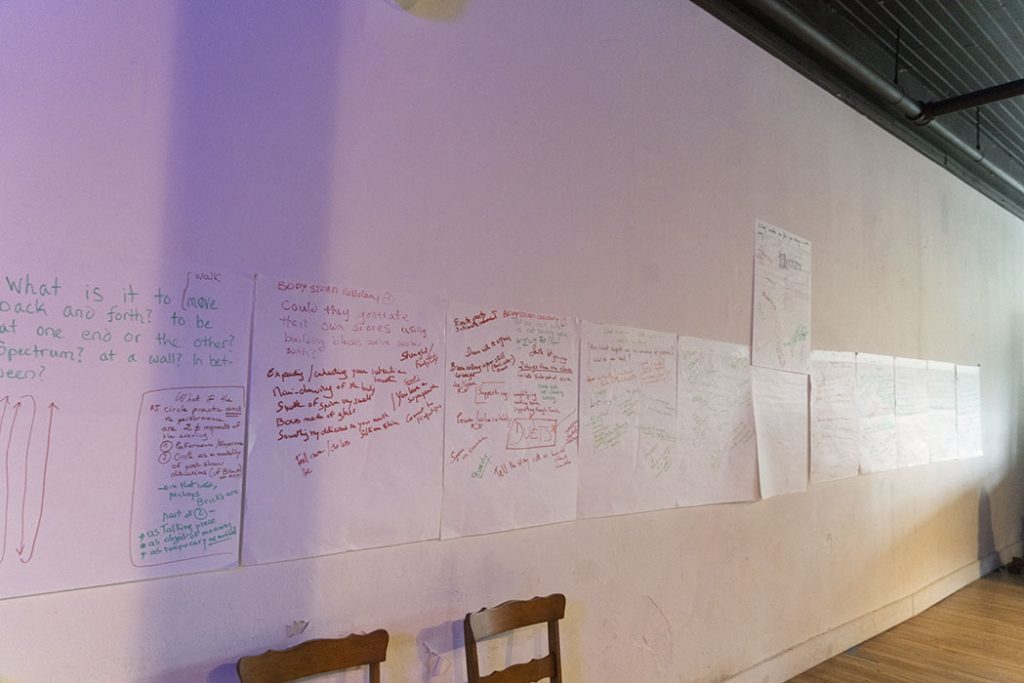
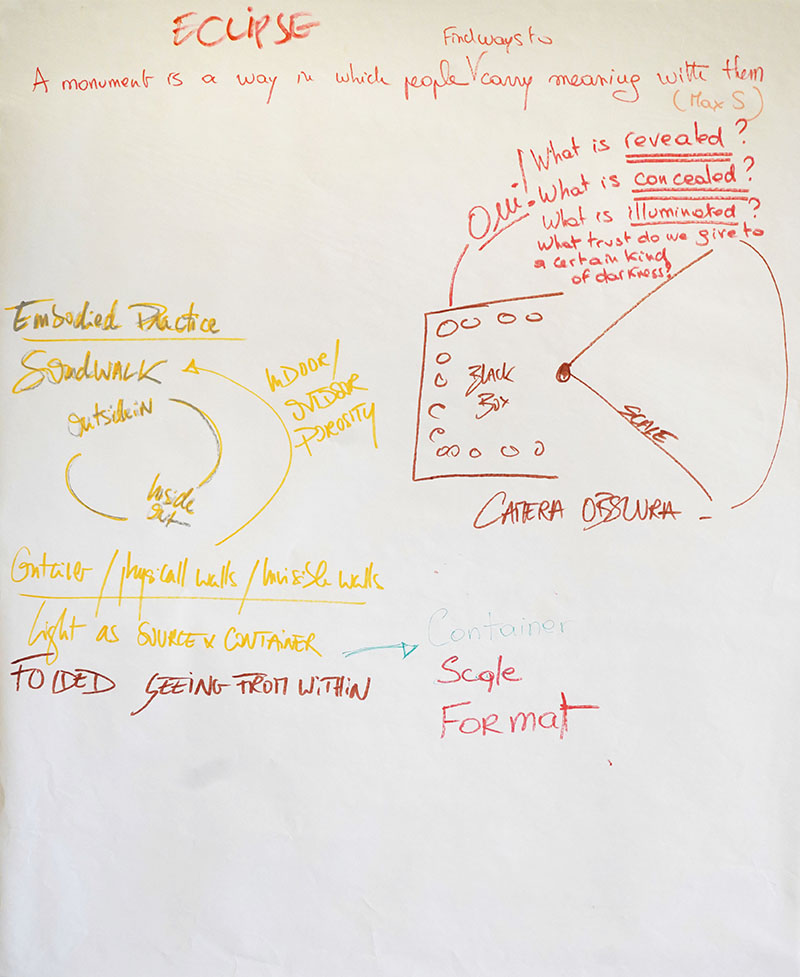
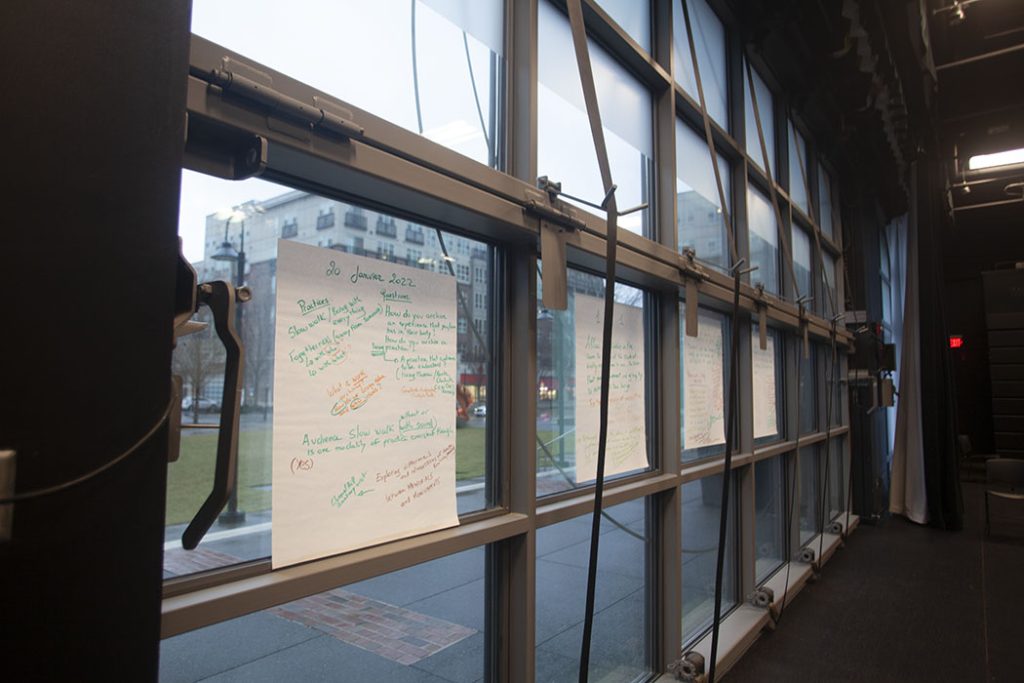
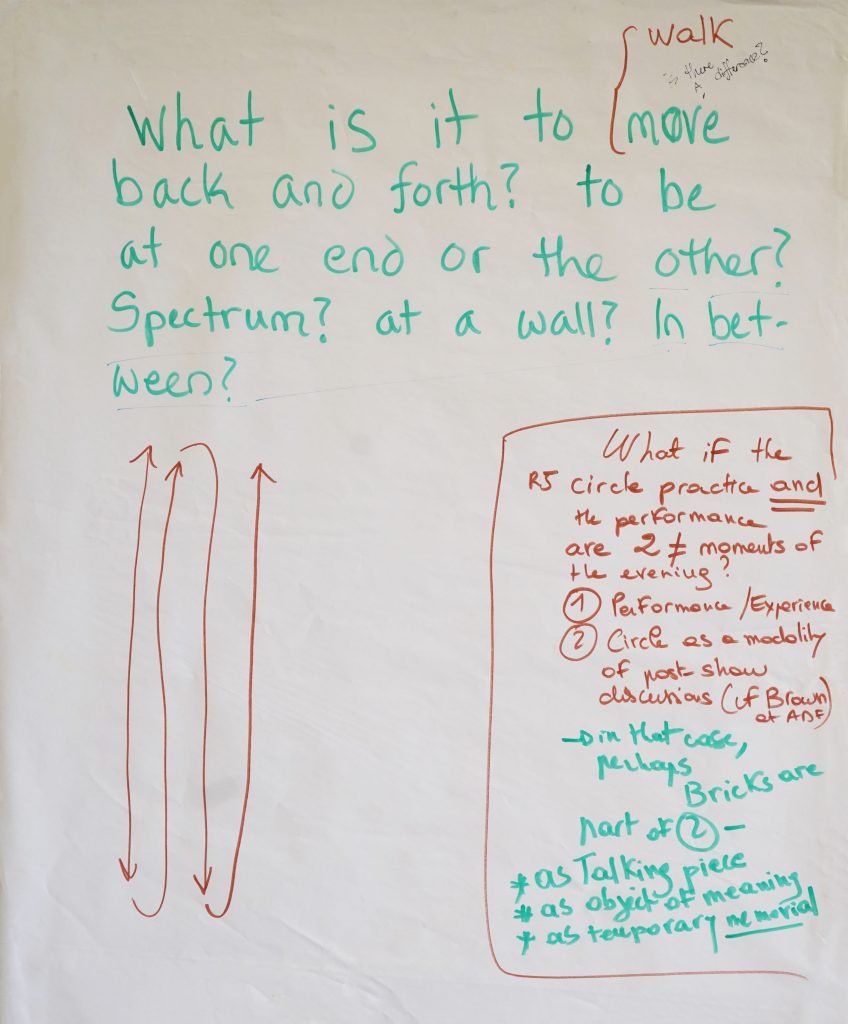
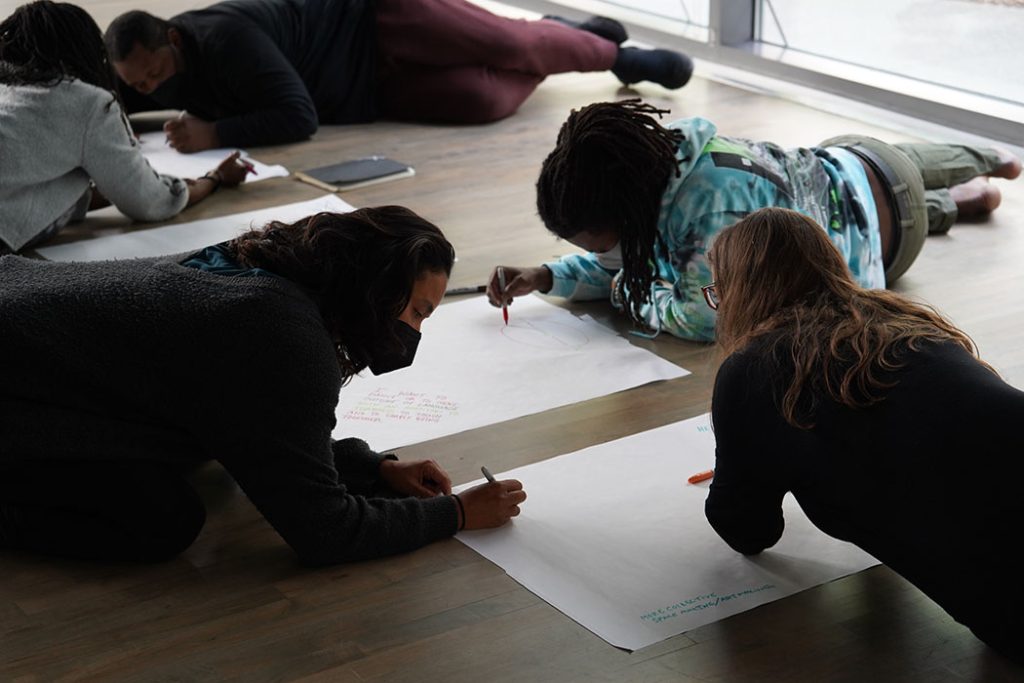
Tommy: When we bodystorm, we lay out a series of large pieces of paper. Then, without speaking, we just write and draw and connect ideas together. We do this before we fashion them into something linear. I think that its a really helpful way to collaborate with two co-leaders [Culture Mill is co-lead by Tommy and Murielle]. In my previous experiences of collaboration, creating performance with two or more people through spoken language, there’s always this feeling of a of a battle of ideas immediately. Someone is already trying to formulate ideas into some linear or logical in order to progress. In these instances, feeling, sensing, and ideas are not allowed to coexist in the first place. It feels like whoever is most persuasive or capable in, you know, linguistic logical thinking will prevail. And so what I like about this body storming process is it bypasses that, and it allows different ways of sensing and feeling the world and thoughts and ideas and emergent possibilities to coexist for a while. Bodystorming allows the process of integration towards a more linear form to be more gentle and generative and, ultimately, more dynamic.
Murielle: I feel like there is something profound in this that has to do with decolonizing our processes and re conditioning the ways we have been taught to process. There exists a system of value that we [feel pressured to] abide by: thought needs to be linear to be valid. Thought needs to be articulated in a certain way to be valid. We want to move away from that. We want to start with the body. Language is not the only thing in the room. Bodystorming also helped us to find a different relationship with language. It especially helped me in the first place as a foreigner, too. That’s actually even how bodystorm came about is me being like, “wait a second… English is my third language and we are choreographers and dancers. There is a gap between what we are saying we are doing and what we are actually doing when we begin with this polished, linear language first and then go into our body. So, how do we reverse that?” Bodystorming also allows for different bodies of color and of culture to exist in the room in a different way. And then we find a point of connection to go forward from.
Tommy: Bodystorming so far as it relates to the performance is that the choices that we make in the performance, how everything comes to be, comes out of that process of bodystorming. And so the way that we arrive at ideas, or movements, or situations in which people are moving a certain way, CJ holding space a certain way, placing a brick a certain way, standing outside and turning… that process is supported by this action of bodystorming that we’re talking about.
Murielle: Bodystorming is definitely the grounding of our creative process and it is how we start any creation of a performance. The ideas that come out on those pieces of paper after we do a somatic practice are the one that we begin then teasing out. Those ideas then become different parts of the performance.
Tommy: And body storming is the basis for our, our process. What we do is we get giant sheets of paper and we lay them out in the studio. We put them on the walls, we get out lots of pens and pencils, and we set a timer. And for that time we don’t speak, we just write, draw, we pay attention to our senses and move and our bodies quite a bit. We will also read what the other is writing and then move again. It is an intertwined process of writing and moving.
Murielle: So something important in body storming is that we have those pieces of papers on the ground. We are writing on the same piece of paper, as opposed to different pieces of paper. We create a common ground of language together and then from there, we extract the language and the ideas from different prompts for our performances.
Tommy: Moving while writing totally changes the production of ideas and the quality of ideas.