

Omar at Carolina
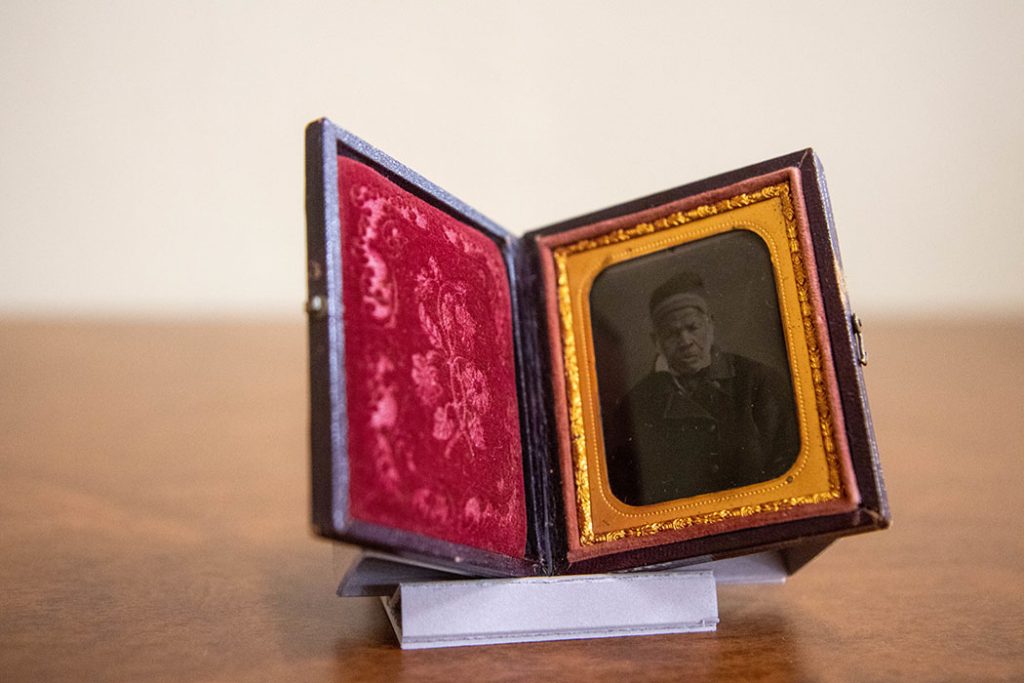
Omar ibn Said had various connections to Carolina during his lifetime. The existing history has many present-day links to this place as well. Archival materials of and by Omar are held by the University’s special collections library, his enslavers maintained decades-long relationships with the University as trustees, and current Carolina librarians continue to generate new scholarship about the Muslim scholar and the life he led in the state. These layered connections gave extra meaning to the presentation of Omar, Rhiannon Giddens’ opera, in February 2023. No contemporaries could have guessed that almost 160 years after Omar ibn Said’s death, an opera about his life and legacy would take the stage at the very school one of his enslavers had attended. Yet, this is exactly what occurred. Explore this page to learn more about the many connections between Omar ibn Said and Carolina. The photo above depicts the Ambrotype of Omar ibn Said, circa 1855, held in the Ambrotype Collection (P0007), North Carolina Collection, Wilson Special Collections Library (photo courtesy of University Libraries).
Omar in the Archives
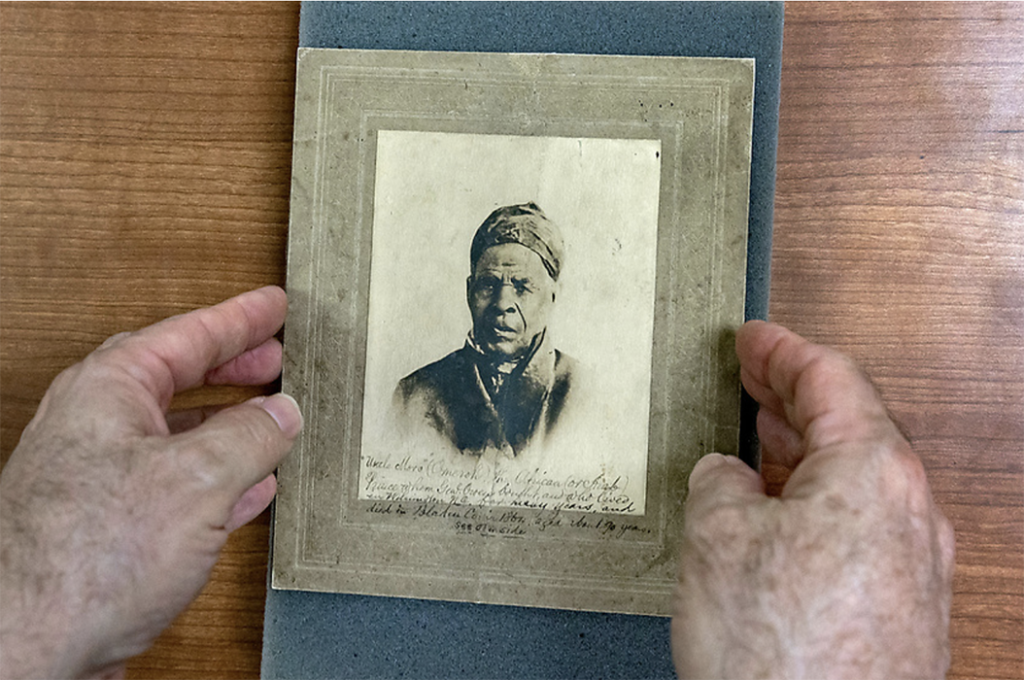
The Louis Round Wilson Special Collections Library stewards a collection of archival documents written by or depicting Omar ibn Said. These materials were acquired one by one, and often made their way to the library as part of larger collections from various families and individuals. One document of particular note is an 1856 manuscript composed by ibn Said and addressed to his enslaver, James Owen. It contains an Islamic blessing and two biblical texts: the 51st psalm and the Lord’s Prayer. Wilson Library also cares for several photographic representations of ibn Said, including an ambrotype. Librarian Sarah Carrier created an informative guide for the collection that contains information about the materials and Omar the person.
The Owen Family and Carolina

Captivated by Omar ibn Said’s Arabic writing upon the walls of a Fayetteville jail cell, James Owen “purchased” him in 1810 and continued to claim ownership over ibn Said until his death in 1864. James spent his youth at the Bingham School in Pittsboro and, once he reached adulthood, took over the management of farming at his father’s Milton Plantation on the Cape Fear River. James would inherit this plantation, its land, and its people upon his father Thomas’ death in 1806. James’ political life was full and included being elected to the State House of Commons in 1801 and serving as an adjutant general in the state militia during the War of 1812. In 1817 James was elected to the U.S. Senate. In 1819 he returned to North Carolina to devote himself to farming and business ventures. During the preceding years, James Owen had continually amassed wealth in the form of land and enslaved people.
James’ brother, John Owen, was the Governor of North Carolina from 1829–1832. John was a student at Carolina in 1804. Though he did not graduate, John Owen went on to serve as a trustee of the University for more than twenty years. Prior to his time as Governor, John Owen served his home county (Bladen County) as a judge of the inferior courts, as a member of the North Carolina House of Commons (1812 and 1813), and as a state senator in 1819 and 1827. As the Owen brothers were close, John Owen would have spent a considerable amount of time with Omar ibn Said. Scholars suspect it is likely because of John that Omar visited Carolina’s campus over the course of his life. Wilson Library holds a collection of papers generated by John Owen that you can explore.
As evidenced by their lengthy political careers and high appointments, the Owen brothers were powerful men from a prominent North Carolina family. John Owen’s name can be found on a marble tablet in the halls of Memorial Hall, the building in which the opera Omar was performed, alongside the names of other affluent North Carolinians who supported the University.
Omar ibn Said was treated as a novelty due to his ability to read and write Arabic. He was frequently used as a source of entertainment for the Owen brothers and their social peers. The Library’s collection includes a carte de visite and an albumen print of Ibn Said. Images of Omar and samples of his writing were often given as gifts between wealthy white people due to Omar’s status as an oddity and curiosity. Carte de visites in particular were mass produced, meaning that many people owned images of Omar. This is, in fact, why the Library has images of Omar in their collections—they came to the library in the papers belonging to prominent white Southern families.
This section was largely informed by a conversation with North Carolina specialist and Librarian Sarah Carrier