
Rhiannon’s Research Assistant on working with the artist
My name is Callie Beattie, and I am a dual-degree graduate student pursuing my Master of Science in Library Science and my Master of Art in Art History. As an archivist and librarian, I focus on artist archives; artist networks and moments of creative cross-collaboration; how artists interact with archives (their own and others); and women, queer, and underground-centered self-publishing practices. My work aims to elevate counter-narratives to provide greater context and broader access to our shared cultural heritage. In fall 2022, I began working with Carolina Performing Arts as the Southern Futures Research Assistant. Most of my work centers around conducting archival research for Southern Futures Artist-in-Residence Rhiannon Giddens.
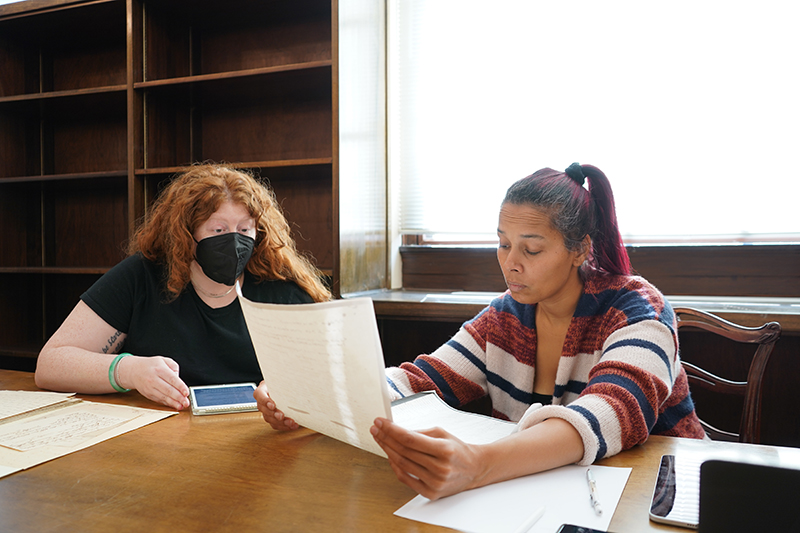
Rhiannon is interested in cross-cultural interactions, race relations, racial perceptions, archival materials created by marginalized groups, and moments of cultural exchange from the 1800s to the early 1900s. Through her archival research, she is interested in revealing and undoing what we think we know about history; in her own words, “I love everything that hammers against this ironclad narrative of the last 100 years.” My work begins in the months leading up to Rhiannon’s on-campus research visits. I start with a list of terms that I use to search Wilson Library’s online finding aids to identify collections and materials that may be of interest to Rhiannon. If the finding aid has digitized items, or if the item I am interested in is digitized, I can do a large portion of my work remotely. For collections or items that are not available digitally through the finding aid (sometimes there are access restrictions, for example), I make an appointment and then make requests to view items in Wilson’s research room; my process is typically an even mix of both remote and in-person research. The goal is to generate a research dossier of previewed materials that fit Rhiannon’s timeframe and geographical location and include some of her more specific research interests. This process allows us to slightly condense the research process as Rhiannon is only with us in person for a week at a time, and it often takes weeks and weeks of research to put together the curated dossier of items—we do not have time to start from the beginning of the research process during her visits. Rhiannon and I go into Wilson’s research room when she is in town, sit down with the pre-selected items, and begin a deeper dive into the materials. I bring her up to speed with contextual information about the item, the collection it is from, the person or community that created the item, etc. Then, she can take her time reading, writing, reflecting, and taking photos of what she finds most interesting.
-
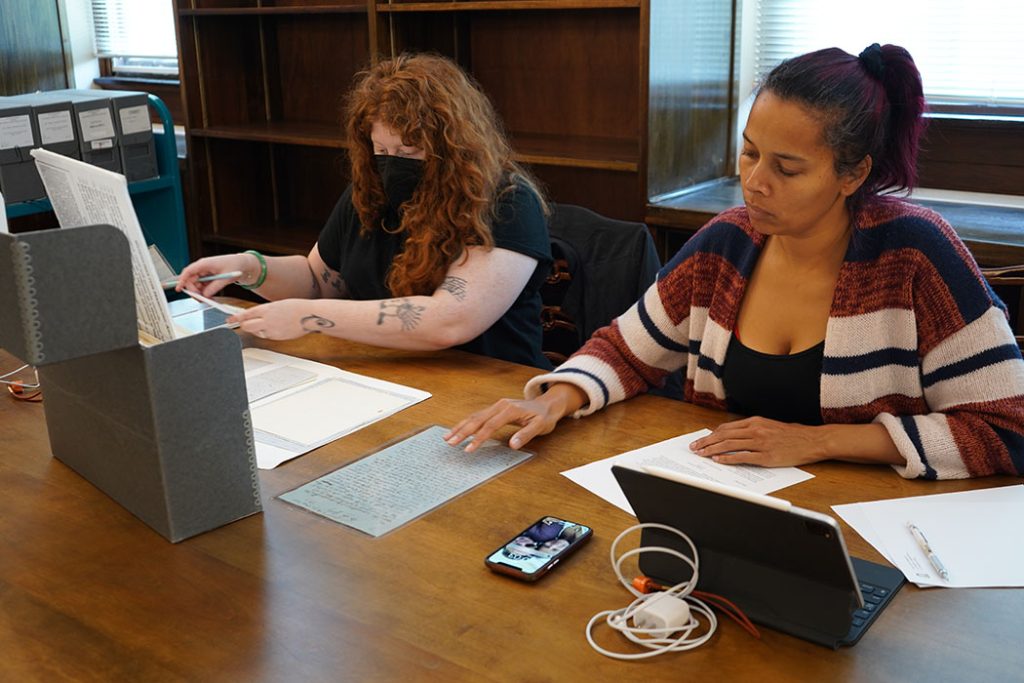
Callie and Rhiannon in Wilson Library's Research Room. -
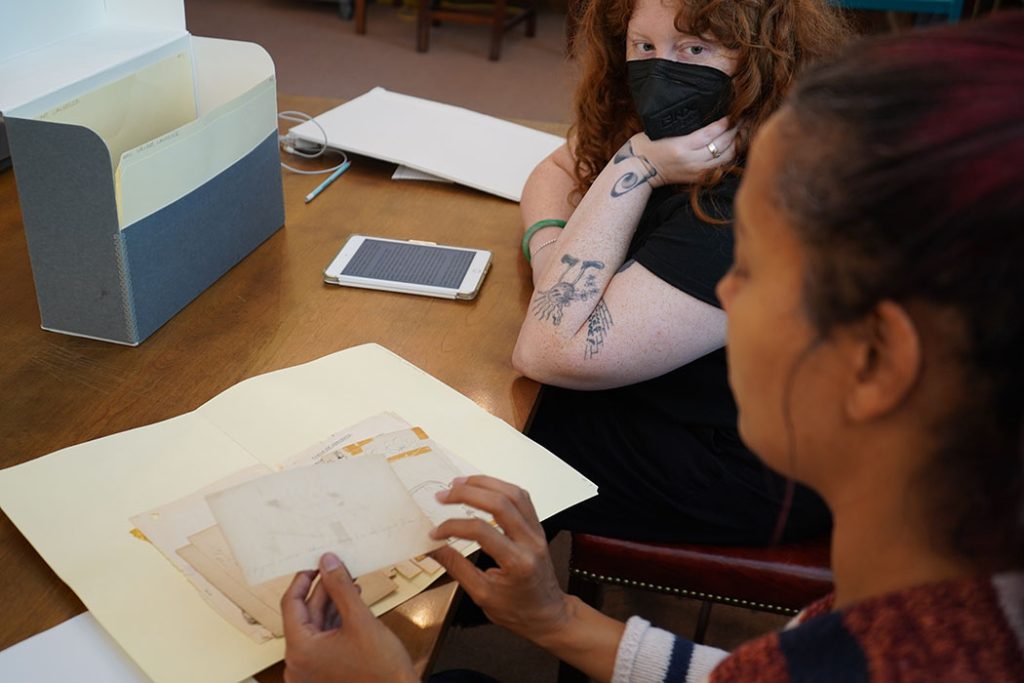
Rhiannon looks at an archival document. -
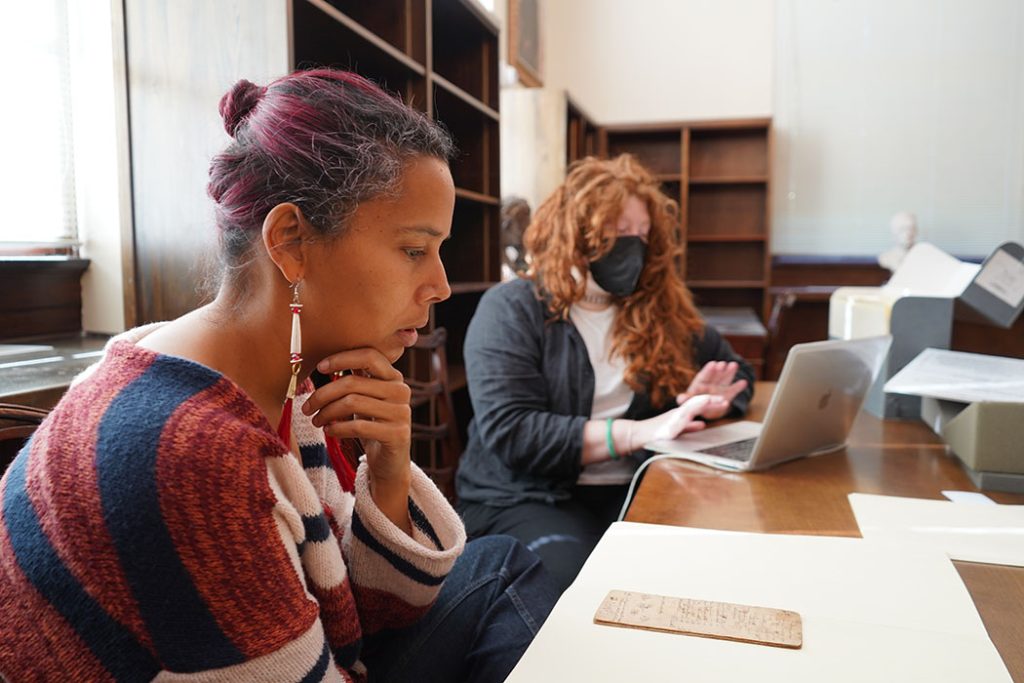
Rhiannon and Callie conducting research. -
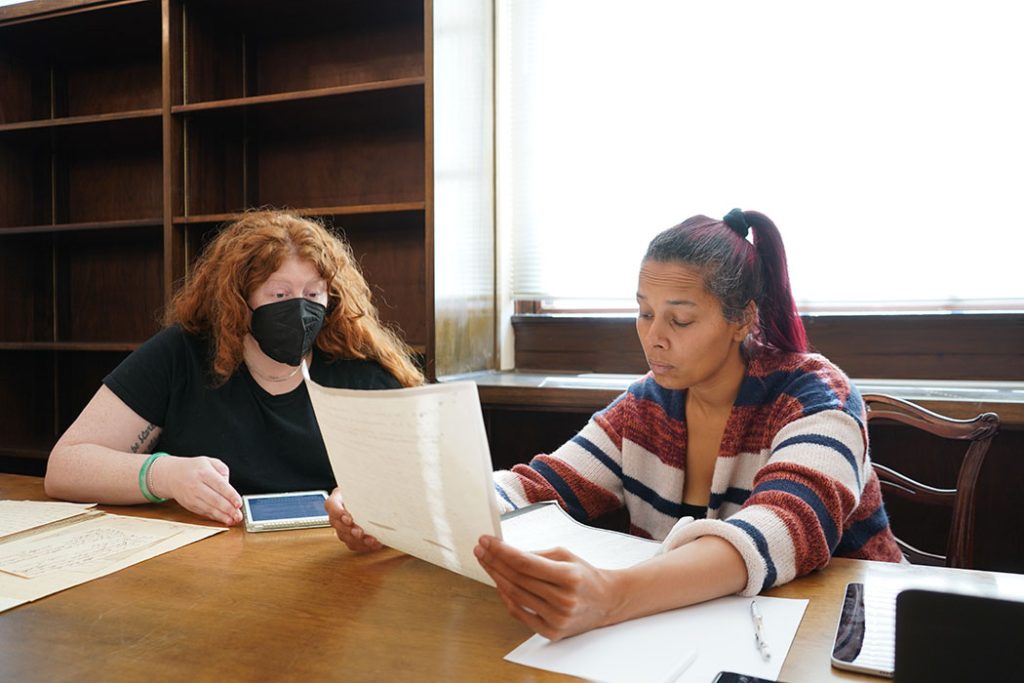
Callie and Rhiannon discuss a document. -
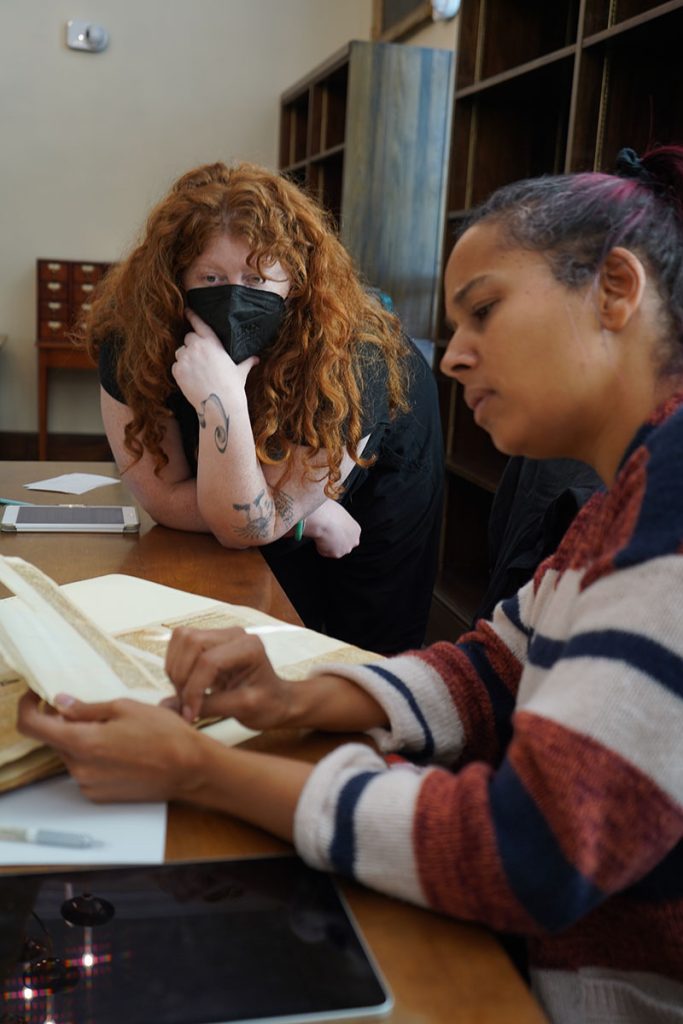
Callie and Rhiannon deep in conversation. -
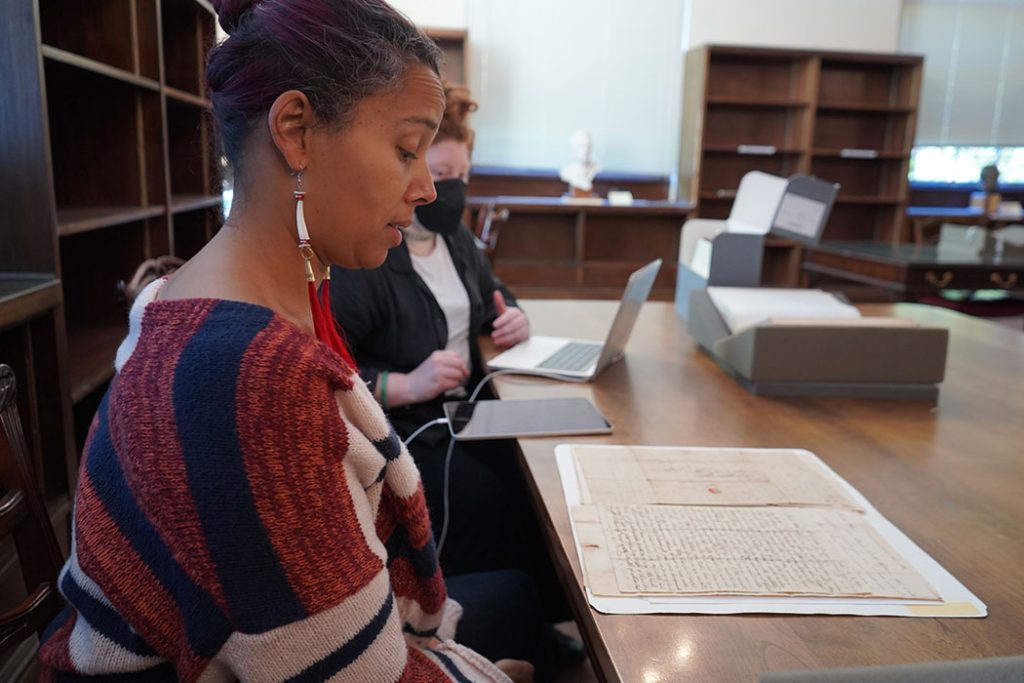
Rhiannon and Callie. -
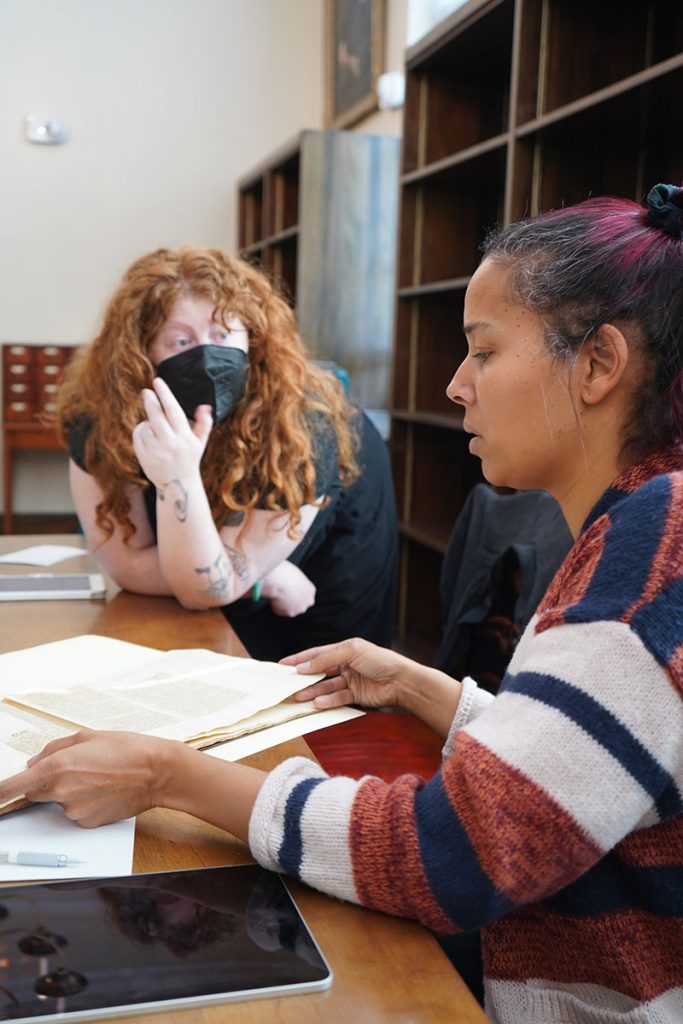
Callie and Rhiannon talking. -
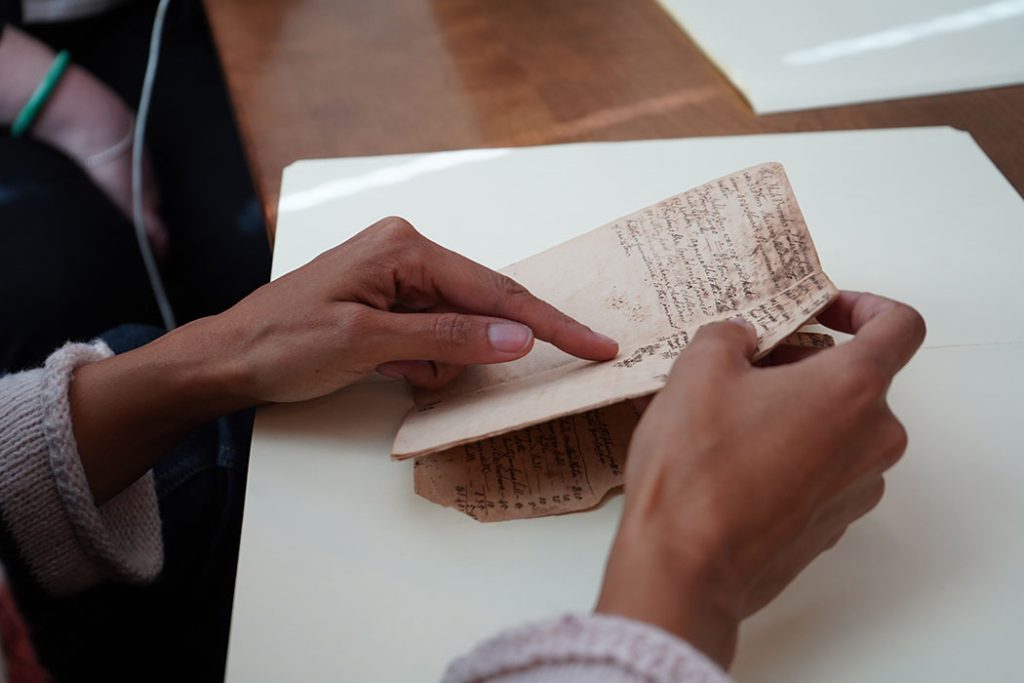
Rhiannon points out something interesting to Callie. -
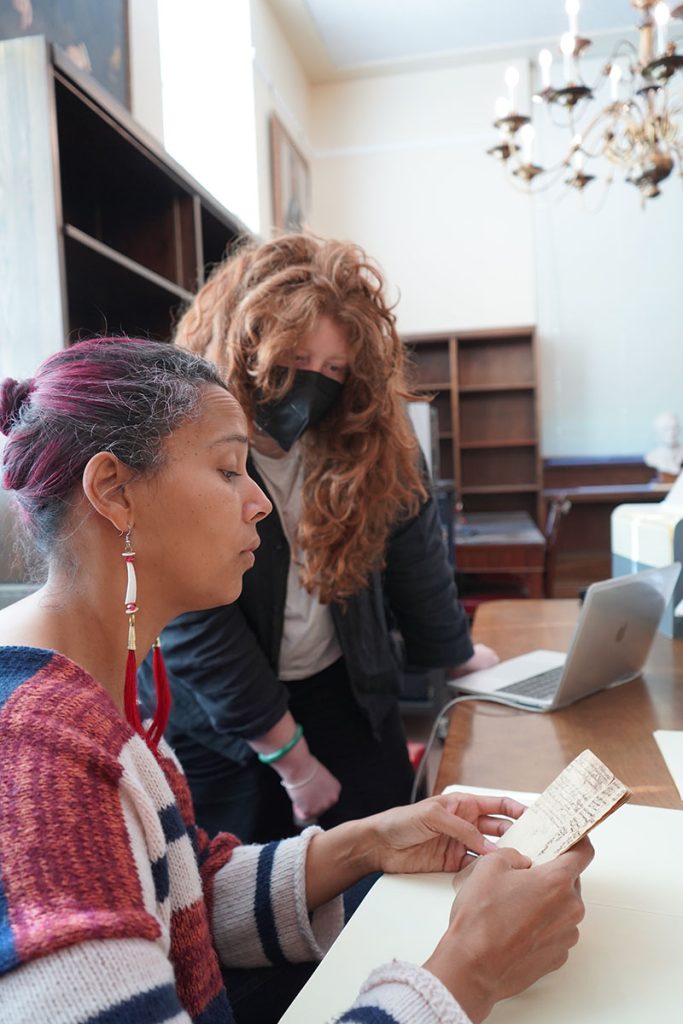
Rhiannon and Callie take a closer look at a document together.
Due to the inherent bias historically built into the creation of archives and special collections, and the access limitations bound up in subject headings or archival search terms, locating documents that reflect specific moments of cross-cultural exchange and documents created by non-white people in this timeframe is particularly challenging. Wilson Library has done excellent work toward conscious editing and reparative description. They edit archival finding aids to update racial slurs and racist terminology, provide race identification of those who generated materials in a collection, and correct omitted information. Even so, with such extensive holdings across five significant collections, archival research may require using outdated terms to locate materials matching Rhiannon’s interest areas. Additionally, if a particular search term is not in a collection finding aid or the subject heading does not exist, it will not result in any hits. If a search term does not generate any results from the finding aid or collections search, it quickly becomes a “needle in a haystack” situation to try to locate materials on or about the topic. One way through this particular challenge has been working with Special Collections Research and Instruction Librarian Aaron Smithers and Manuscripts Research and Instruction Librarian Mathew Turi, who have been so helpful in pointing me toward collections that I may not have found or that would have taken me months to find through search term trial and error.
When Rhiannon is at UNC for her residency weeks, she connects with partners across campus for meaningful discussion around shared interests. I’m lucky enough to sit in on these conversations, which I use as inspiration for new directions for archival research. While listening, I jot down quotes and ideas for new search terms. For example, during Rhiannon’s first meeting with Professor Glenn Hinson in fall 2022, I was able to generate a list of new words to search, including “Valdese,” “Tambo,” “Tambo-Spinner,” “Afro-Gaelic,” and “Ulster.” In a previous conversation, before my time with CPA started, Rhiannon was in conversation with Jerma Jackson and Heidi Kim. Though I had not yet met Rhiannon, I could begin research on her behalf by reading through the transcripts of those conversations. Those conversations allowed me to generate my first list of search terms; some of those first terms were “immigrants,” “aliens,” “Black,” “race relations,” “railroad,” “Moravian,” “slaves,” “enslaved people,” “migration,” and “Irish.” These conversations have proven to be very fruitful. As a researcher working on behalf of an artist, I can work directly from first-hand conversations around her interests—the term lists are generated straight from the source. Of course, Rhiannon and I also have discussions about her work, her interests, and avenues she’d like me to explore through our research. Still, the opportunity to listen to Rhiannon talk about her interests with others who are just as passionate is a significant source of inspiration for my work as her Research Assistant.