

Eclipse
Eclipse was an effort to temporarily eclipse the power projected by our public spaces. Centering on the labor and legacies of Black and indigenous people, this community care ritual invited the public to practice assembly and build belonging through the body.

About Eclipse
When history is written by and for those in power, how do we access the true complexity of our past? Through Eclipse, Culture Mill sought to engage this question and lead the public to a new understanding of the familiar.
In Eclipse, Culture Mill brought together audiences and a cohort of local artists to build an imaginary monument using bricks and bodies. Audience-members-turned-participants were invited to join a choreographic practice that used restorative justice practices and embodiment tools to investigate how assembled bodies and stories could form an architecture of togetherness denied by buildings and other spaces on Carolina’s campus.
Together with the project participants, Culture Mill developed a method for somatically learning place that relied on a sensory connection with history. Eclipse was a site-specific investigation of the land CPA’s Joan H. Gillings ArtSpace at CURRENT and CURRENT Studio now sits on. Informed and inspired by Geeta N. Kapur’s To Drink from the Well: The Struggle for Racial Equality at the Nation’s Oldest Public University, the artists used bricks as a material connection to the enslaved people who once made bricks from Chapel Hill’s red clay—the very bricks they used to build the 8 surviving original structures on campus.
Learning new facts about a known place fundamentally challenges our perceptions of that place, as well as other spaces in our world. What stories lie buried beneath earth and time? How can spending time in our bodies with others in these locations lead us to fresh insights? Eclipse prompted these and other questions throughout its run. The project was both a performance and a practice of community learning. It peeled back layers of time to unearth a hidden history of UNC, Chapel Hill, and the origins of the local Black community. With the help and leadership of the project’s many participants, Culture Mill uncovered a buried past, and strove toward a togetherness we’ve not yet imagined.
Eclipse was a Culture Mill production. This work was commissioned by Carolina Performing Arts at the University of North Carolina at Chapel Hill. The presentation was supported in part by the Robert and Mercedes Eichholz Foundation. Culture Mill, Inc. was a 2020 NDP Finalist Grant Award recipient. Support was made possible by the New England Foundation for the Arts with funding from the Doris Duke Charitable Foundation and the Andrew W. Mellon Foundation to address sustainability needs during COVID-19 and in support of Eclipse.
-

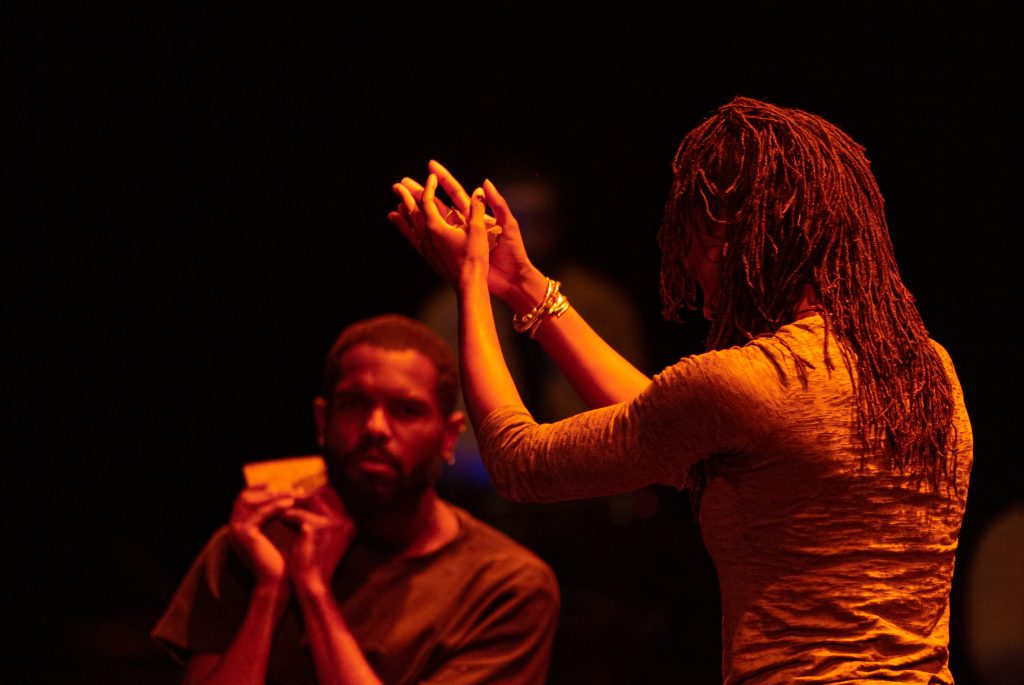
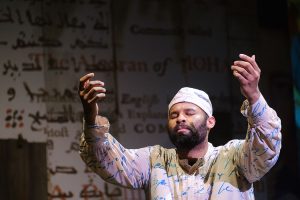
Cj Suit delivers Eclipse's monologue. Photo by Shannon Kelly. -

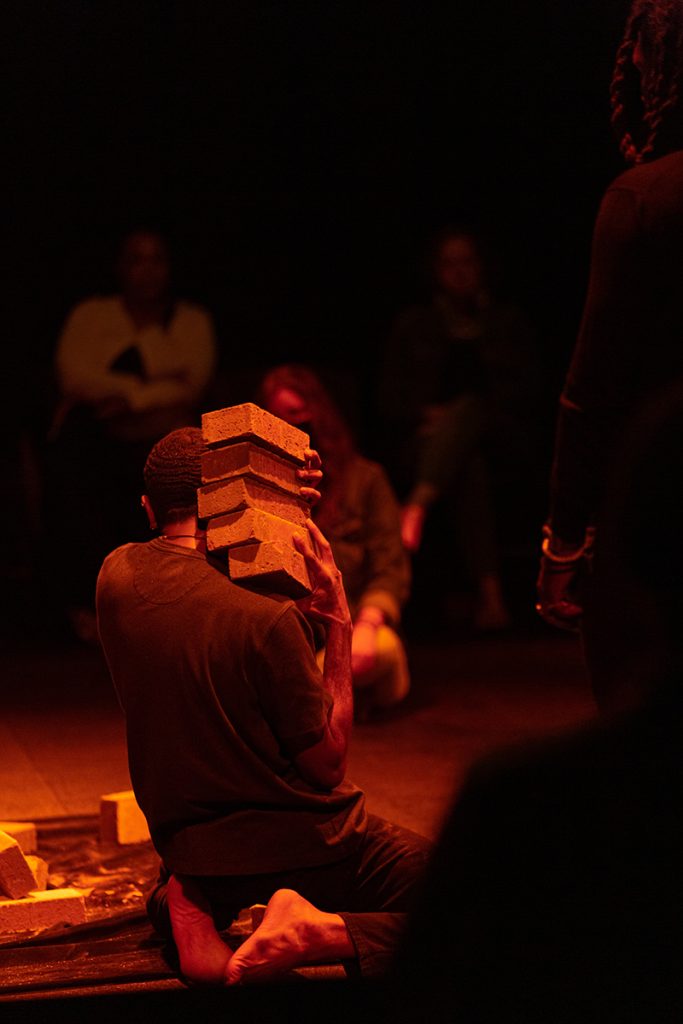
Jasmine Powell and Anthony 'Otto' Nelson Jr. dance upon the pile of bricks. Photo by Shannon Kelly. -
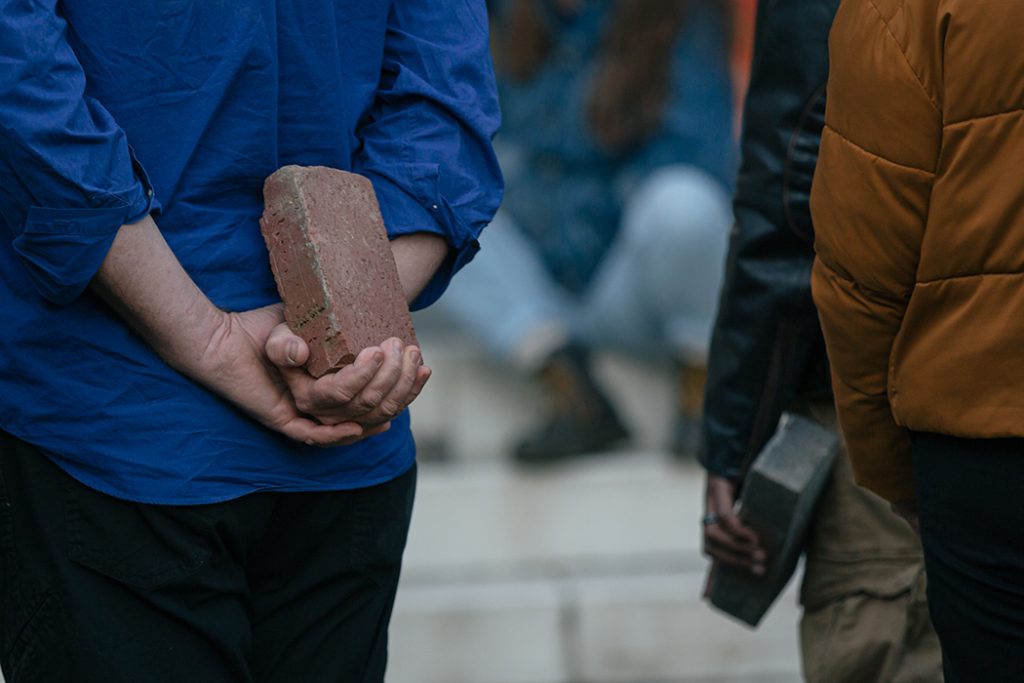
A participant holds a brick while hearing CJ's monologue. Photo by Shannon Kelly. -
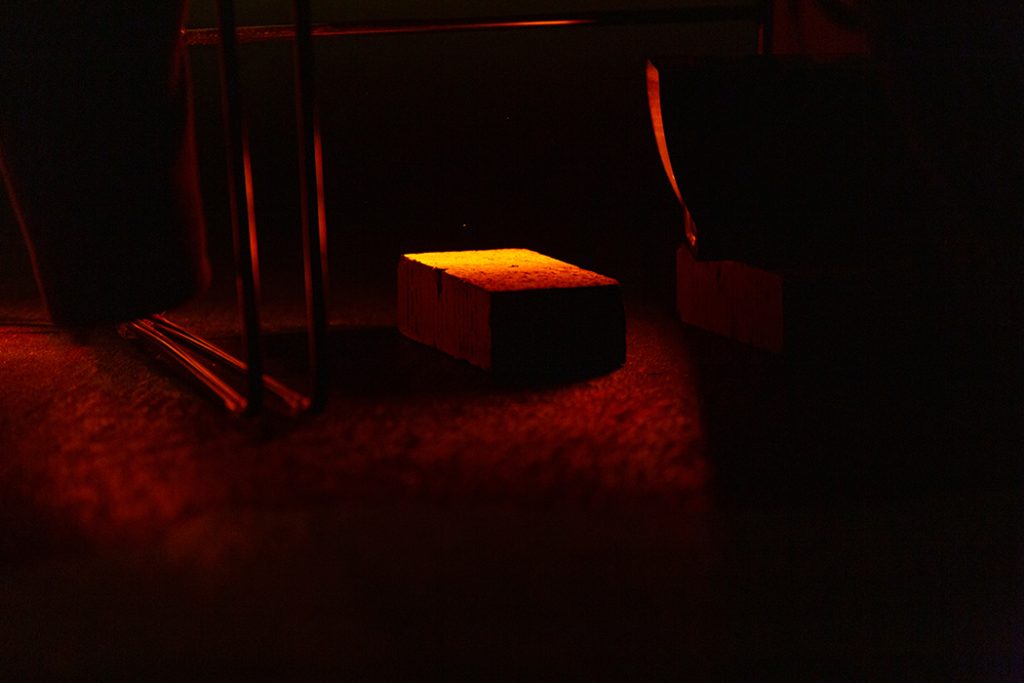
A brick beneath a chair in the CURRENT ArtSpace. Photo by Shannon Kelly.
 `
`
The Performance and The Practice
Eclipse was a participatory performance held at CURRENT ArtSpace in April 2022. The experience included bricks from UNC facilities, a monologue about the 100+ year history of the land outside CURRENT ArtSpace, place-based meditations, and a communal navigation of space, time, and history. Eclipse was also a practice—one of re-learning a familiar place through somatic experience and restorative justice.
Eclipse Resources
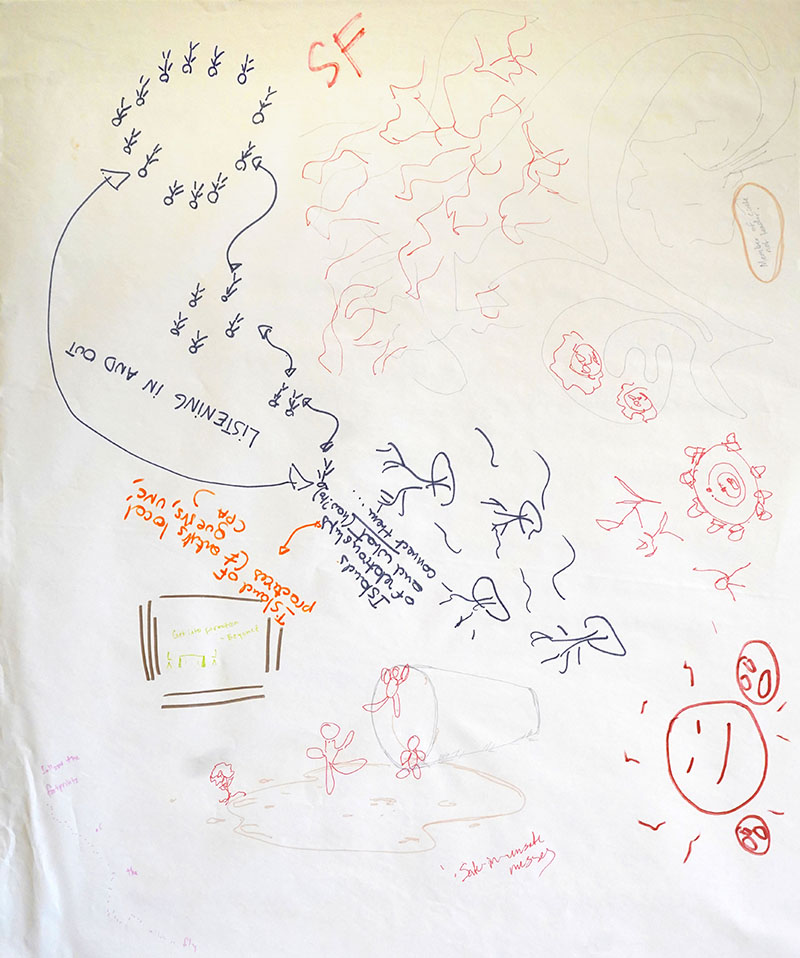 `
`
Body Storming
When working through an idea, Culture Mill prefers to ‘bodystorm’ instead of brainstorm. Bodystorming allows for different ways of sensing and feeling the world.
 `
`
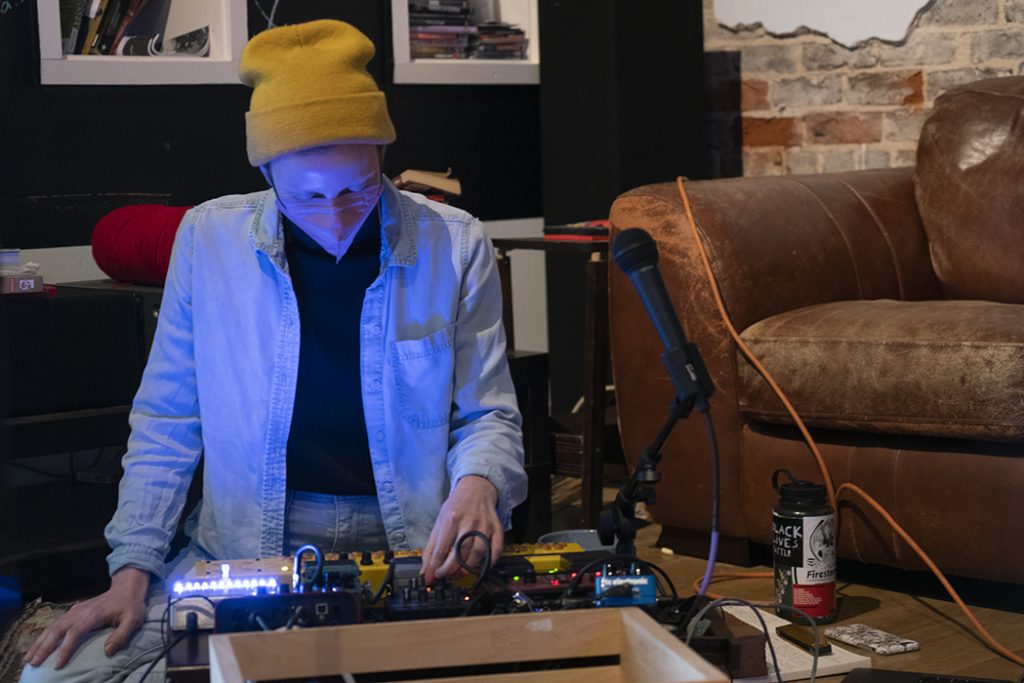
Sounds of Eclipse
Eclipse was a site-specific performance connecting to local history through the body, rooted to the place of Chapel Hill by a carefully-crafted soundscape.
…if we want to provoke change, we need to start with our bodies.
– Murielle Elizéon, Culture Mill
-

CJ Suit delivers his monologue. Photo by Shannon Kelly. -

A participant reaches for their brick. Photo by Shannon Kelly. -
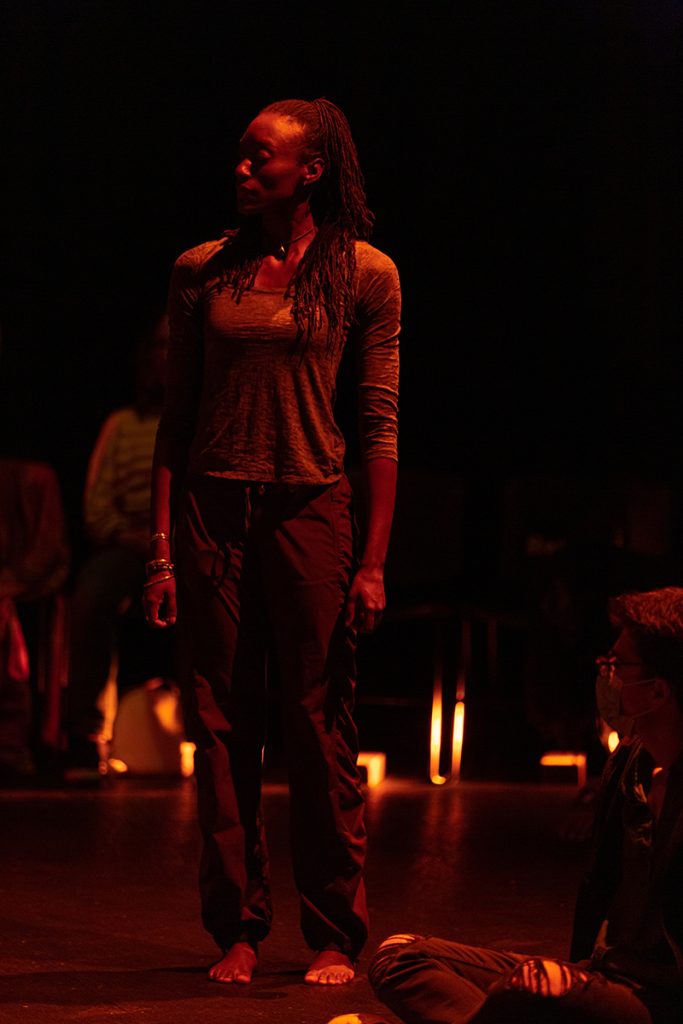
Jasmine Powell. Photo by Shannon Kelley. -

Jamine Powell and Anthony 'Otto' Nelson Jr. dancing atop the bricks. Photo by Shannon Kelley. -
Anthony 'Otto' Nelson Jr. Photo by Shannon Kelley. -
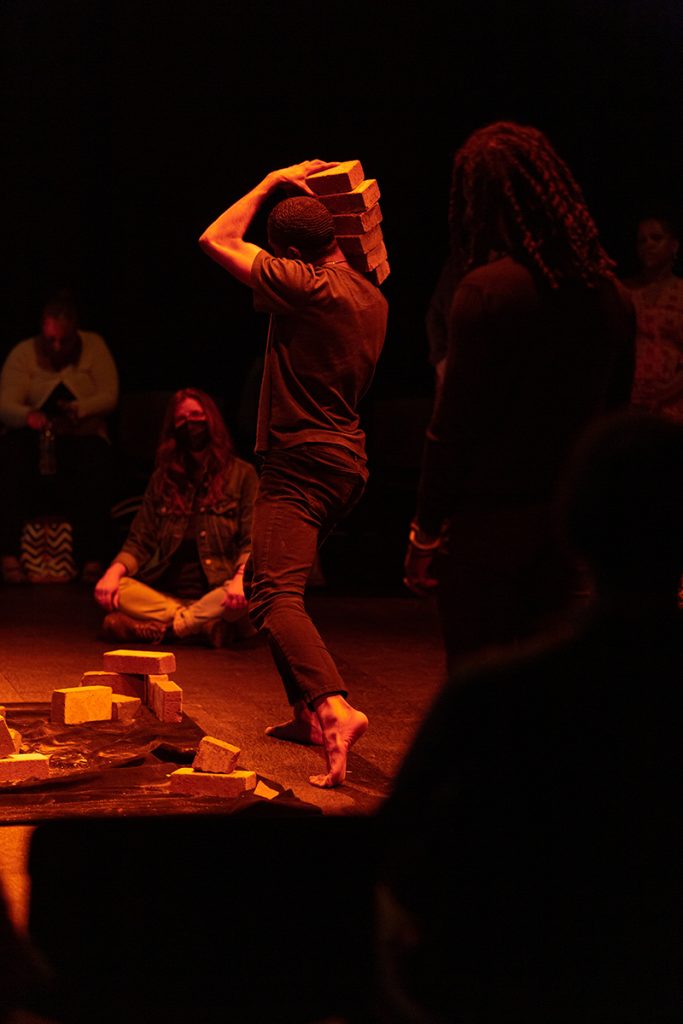
Anthony 'Otto' Nelson Jr. Photo by Shannon Kelley. -

Jasmine Powell. Photo by Shannon Kelley. -

Otto looks up at the sky from the lawn outside CURRENT ArtSpace. Photo by Shannon Kelly.
 `
`
Northing Abides
Nothing Abides emerged from a 2023 collaboration between Cortland Gilliam and Brian Howe. Developed through an exchange and remixing of each other's poems, the work evolved into a layered duet blending text, voice, and musical interludes. Functioning as both poetic text and performance score, Nothing Abides reflects on public space, labor, and history, using the brick as a central metaphor for collective memory and unseen forms of power.
More projects
-

Social Geography
Culture Mill, The Eclipse Cohort
-
Omar
Rhiannon Giddens, Kaneza Schaal