

Omar
Omar is the story of one North Carolinian, Omar ibn Said, creatively translated by another, Rhiannon Giddens. Omar disrupts the false narrative of a monolithic experience of slavery and, in doing so, tells a tale of faith, loss, resilience, and ancestral power.

About Omar
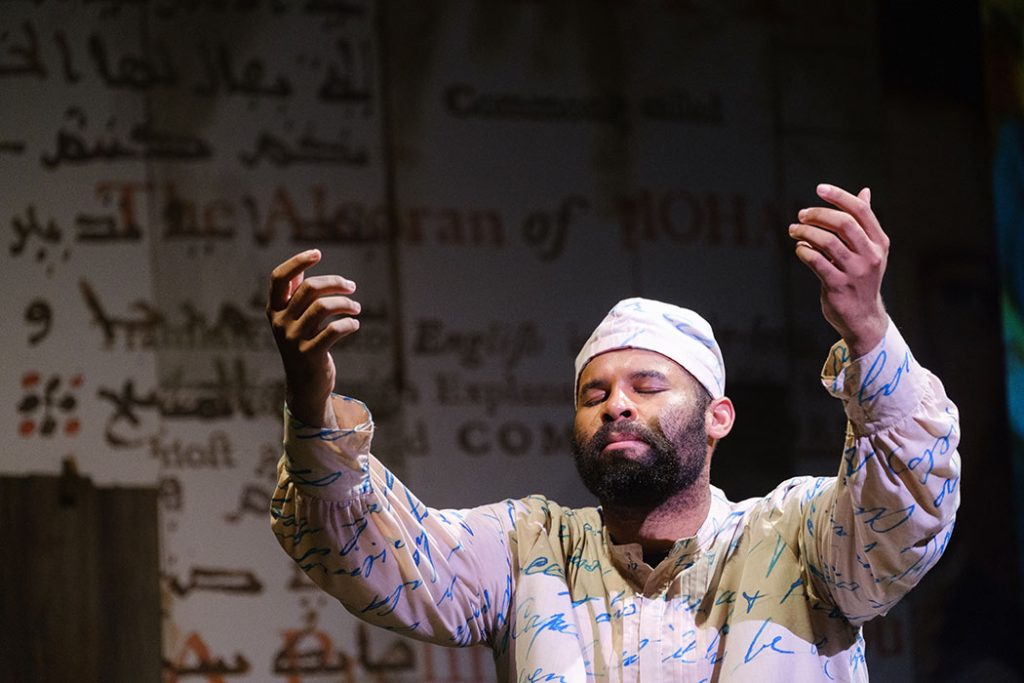
What does it mean to tell a story? How do we reckon with the gaps in our history? These questions and more animate Omar, an opera from librettist Rhiannon Giddens and acclaimed composer Michael Abels. This Pulitzer Prize-winning opera details the life of Omar ibn Said, a West African scholar enslaved in the Carolinas, drawing details from ibn Said’s own 1831 autobiography—the only known document of an enslaved person written in Arabic. Notably, the autobiography is also the sole extant slave narrative authored by someone enslaved at the time of writing. Omar helps bring this vital document and its author into the light.
Again and again, the opera returns to questions of storytelling and the historical record. Drawing from a range of sources—including documents from Carolina’s Louis Round Wilson Library—Omar fuses substantive research with stunning arias to tell a profound story of strength, resistance, and religious conviction in the face of harrowing circumstances. The geographic range of Omar is as vast as ibn Said’s transatlantic life, stretching from Futa Torro (present-day Senegal), where he was forced to board a ship at the age of 37, to Charleston, South Carolina, the site of his initial enslavement, to Fayetteville, North Carolina, where he lived out his final 50 years enslaved by the Owen brothers, who had prominent connections to the University of North Carolina.
For Giddens and Abels, the 2023 performance of Omar in Chapel Hill was a powerful moment. Both Giddens and ibn Said are North Carolinians, and some UNC scholars believe that Omar himself likely walked the grounds of Carolina’s campus while traveling the state with his enslavers. In addition, the performance took place just hours away from ibn Said’s final resting place in Fayetteville—a site of narrative and historical significance.
Omar transcends biographical facts to creatively realize the world of ibn Said’s life and his steadfast Muslim faith through an imaginative soundscape. This rich sonic tapestry, combining West African and Arabic sounds and modes with deep southern cultural musical traditions, imagines the sounds of Omar’s world through the lens of a modern composer. As a singular achievement, the final product is one reimagined telling of a told and untold life—and one version out of infinite possible versions of Omar ibn Said’s story.
Omar was co-commissioned and co-produced by Spoleto Festival USA and Carolina Performing Arts at The University of North Carolina at Chapel Hill. Additional co-commissioners include LA Opera, Boston Lyric Opera, San Francisco Opera, and Lyric Opera of Chicago.
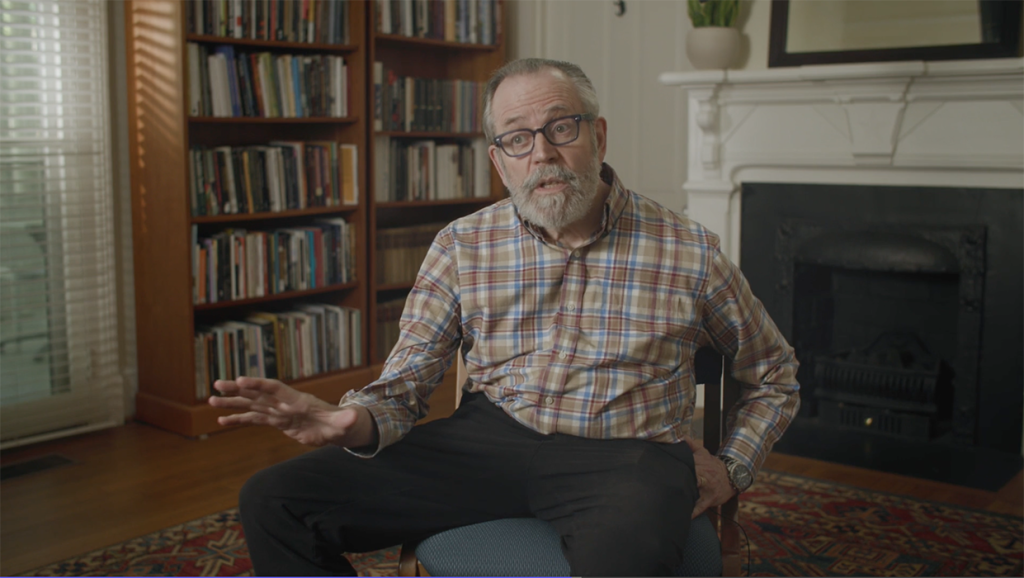
Meet the People Who Made Omar Happen
 `
`
Exploring Omar: Scholarship at Carolina
When Omar was still a collection of swirling ideas in Rhiannon Giddens' mind, she and her team reached out to scholars and conducted research to ensure that the opera had a firm historical grounding. Since some of these scholars work and teach at Carolina, the North Carolina premiere of Omar arrived on a campus already awash with rich, related scholarship. From the archives to the classroom, Omar's story resonated across campus.
 `
`
Sounding the Shadows as Omar Engages the Past and the Present
Dr. Naomi André, David G. Frey Distinguished Professor in the Music Department at Carolina, specializes in research on opera and issues surrounding gender, voice, and race. As a scholar of Black opera, Dr. André was especially captivated by Omar and its significance within the operatic canon. In this essay, she reflects on the work's contribution to a deeper public understanding of the lives of the enslaved.
Omar Resources
 `
`
Omar, Otherness, and the Minimum Wage
CPA and MDC's State of the South partnered to host a public conversation dedicated to examining the historical conditions of slavery faced by Omar ibn Said, while envisioning how we might realize systems that value humanity. Dr. Youssef Carter and Dr. William Spriggs joined Kerri Forrest in a conversation that led MDC's Karim Baer to reflect on labor exploitation and the economic realities of the contemporary South.
-

Cheryse McLeod Lewis as Omar's Mother. Photo by Kent Corley. -

Omar chorus members. Photo by Kent Corley. -

Jamez McCorkle as Omar. Photo by Kent Corley. -

Omar chorus members dancing. Photo by Kent Corley. -
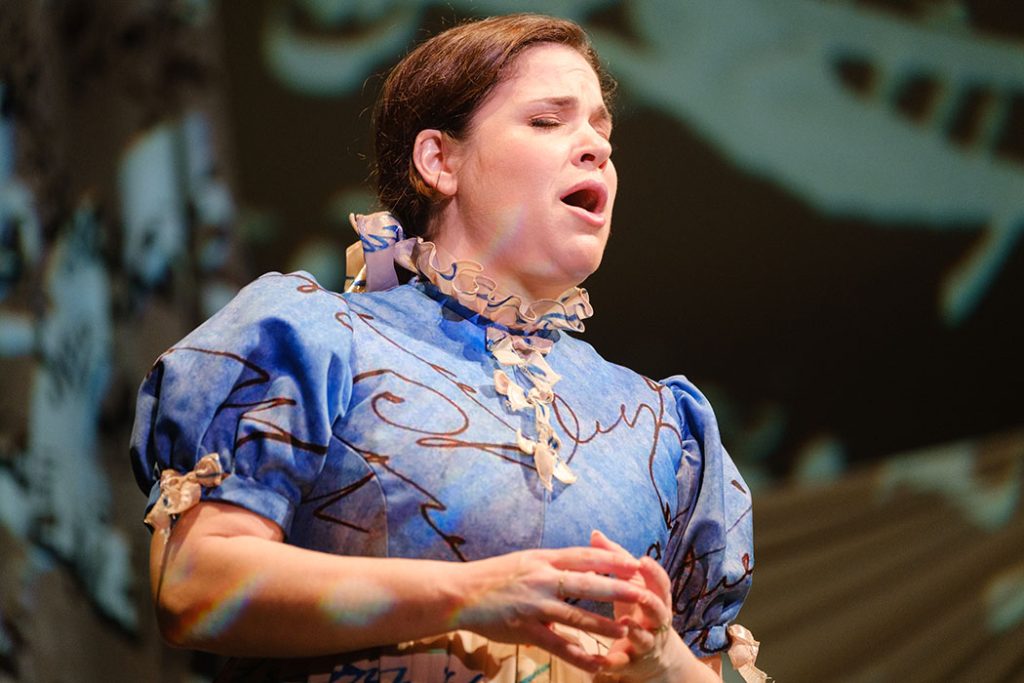
Rebecca Jo Loeb as Little Daughter. Photo by Kent Corley. -
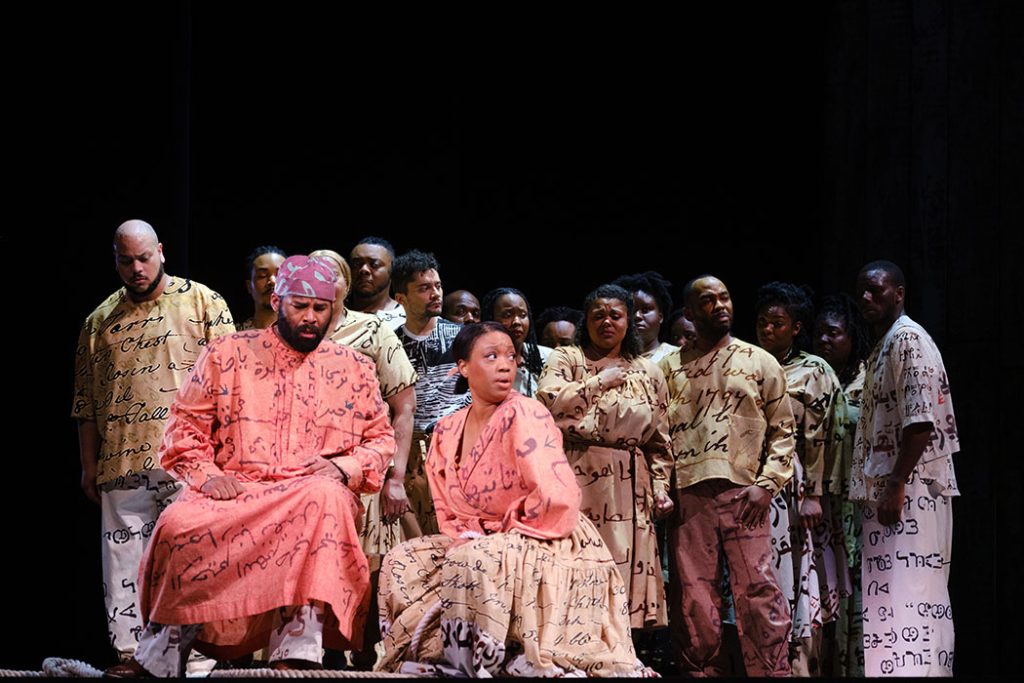
Omar (Jamez McCorkle) and Julie (Laquita Mitchell) with Chorus A behind them. Photo by Kent Corley. -
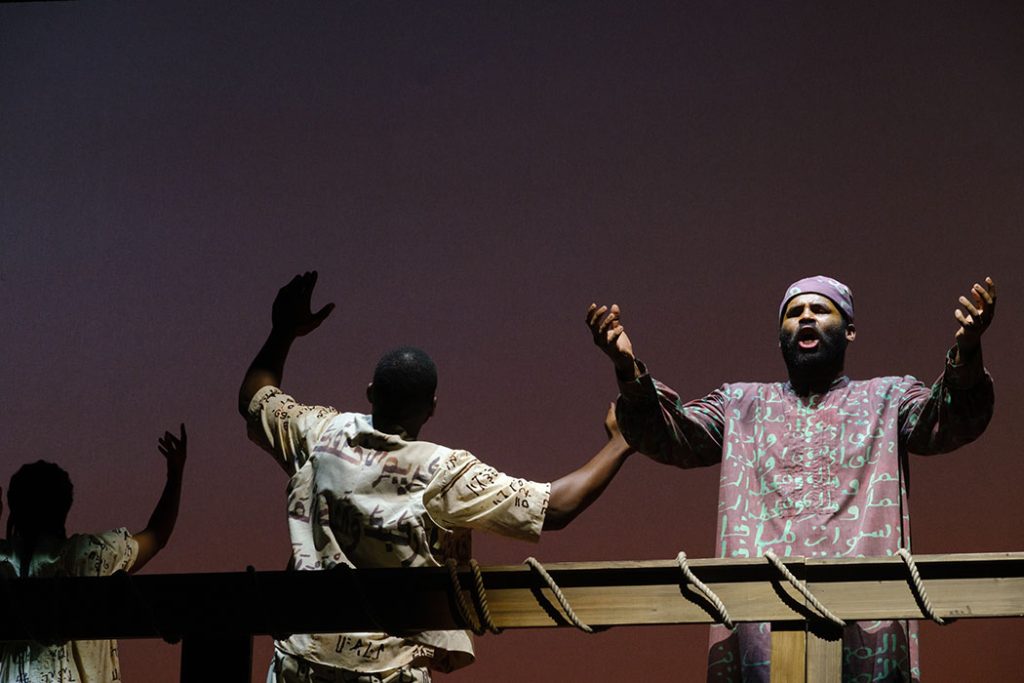
Omar (Jamez McCorkle) in the Middle Passage scene, Act I. Photo by Kent Corley. -
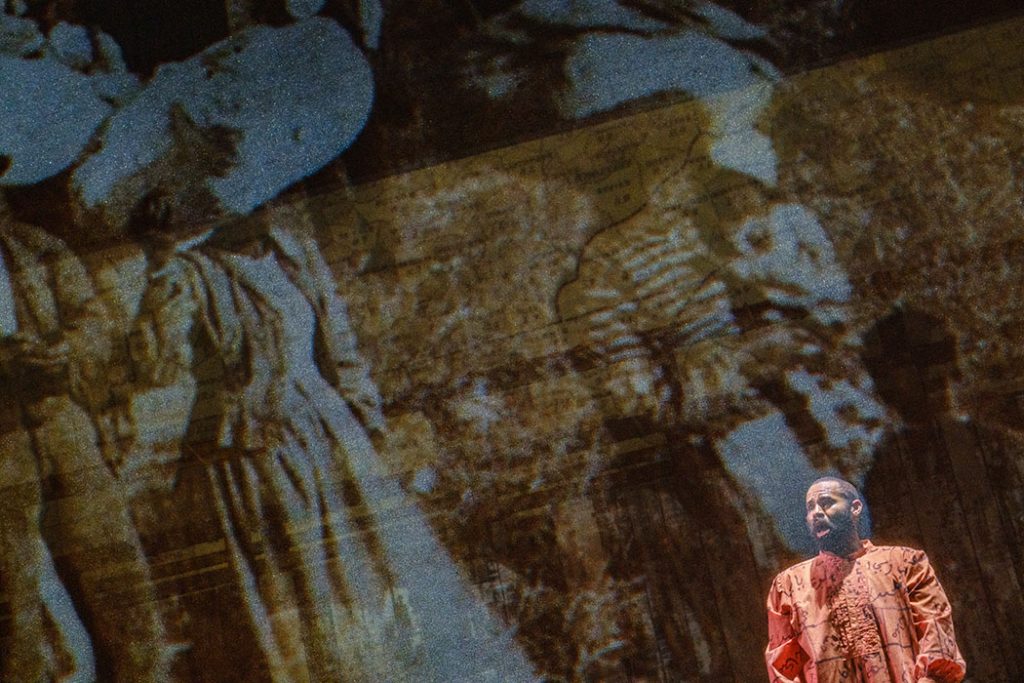
Jamez as Omar. Photo by Kent Corley. -

Chorus A cast members. Photo by Kent Corley. -

Detailed projections using historic images made for a compelling scenery. Photo by Kent Corley.
 `
`
Omar's Dance Histories
Just as Rhiannon Giddens drew from the lineage of Black folk music to create the sound of Omar, Brian Polite and his crew of dancers drew from the rich history of African American dance for their contribution to the opera. There is a moment in Act II of Omar where all the elements of Black American dance forms co-exist. Dancers square dance, lindy hop, whack, and vogue as archival footage of significant moments from Black dance history are projected onto the stage.
 `
`
Omar at Carolina
Wilson Special Collections Library holds 6 items of or by Omar Ibn Said. Scholars believe that it is likely that Omar walked the paths of Carolina's campus while traveling with his enslavers, the Owen brothers, who had lasting connections to the University.
More projects
-

Social Geography
Culture Mill, The Eclipse Cohort
-

Rhiannon Giddens’ Research Residency
Rhiannon Giddens
-
Eclipse
Culture Mill