

Social Geography
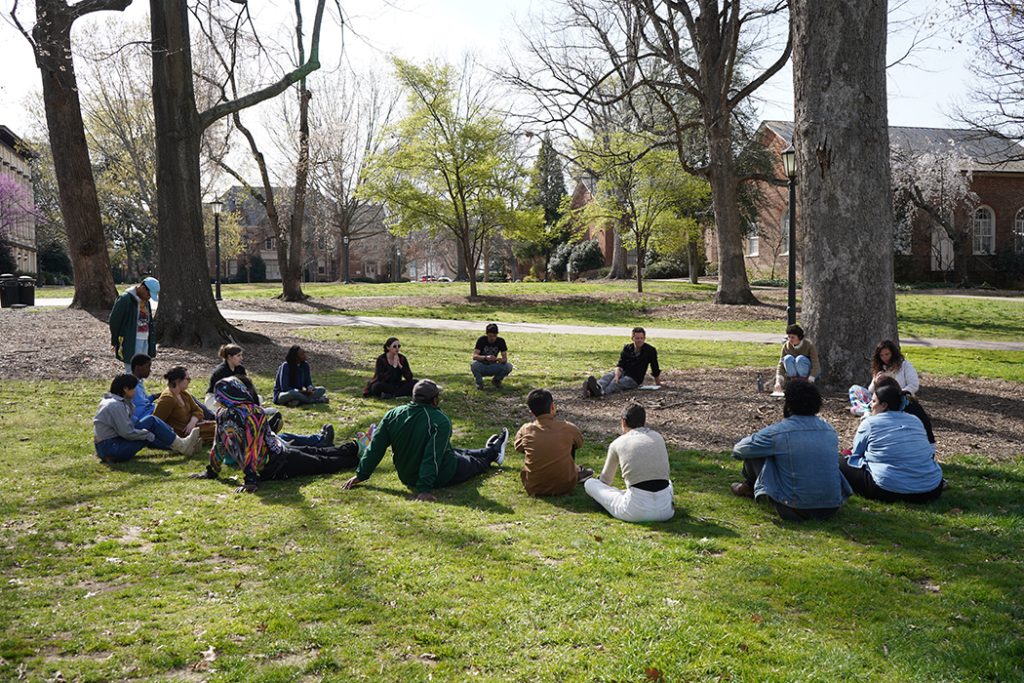
In an effort to make Carolina's built and social history more discoverable, professors, students, staff of the Marian Cheek Jackson Center, Culture Mill, and the Eclipse Cohort joined forces for a reciprocal, semester-long collaboration.
About Social Geography
In collaboration Spring Semester 2022
In Spring 2022, UNC Geography professor Betsy Olson attended Culture Mill’s Eclipse. Inspired, she approached Tommy and Murielle to learn more about the project, and to discover how she might bring the work into her own teaching. After weeks of conversation the three decided to build a collaboratively-taught, semester-long course that applied the practice of Eclipse to another part of the University’s campus. They called this class “Social Geography.”
The course emerged as Betsy and Culture Mill, and Eclipse Cohort member Cortland Gilliam wondered: What would it mean for Eclipse to move into the spaces of main campus? How do we force encounters with our history, and what kinds of encounters might be facilitated? When we think of Southern Futures as a path to understanding Southern pasts, what responsibilities and possibilities do we imagine? How well are we attending to these possibilities and responsibilities?
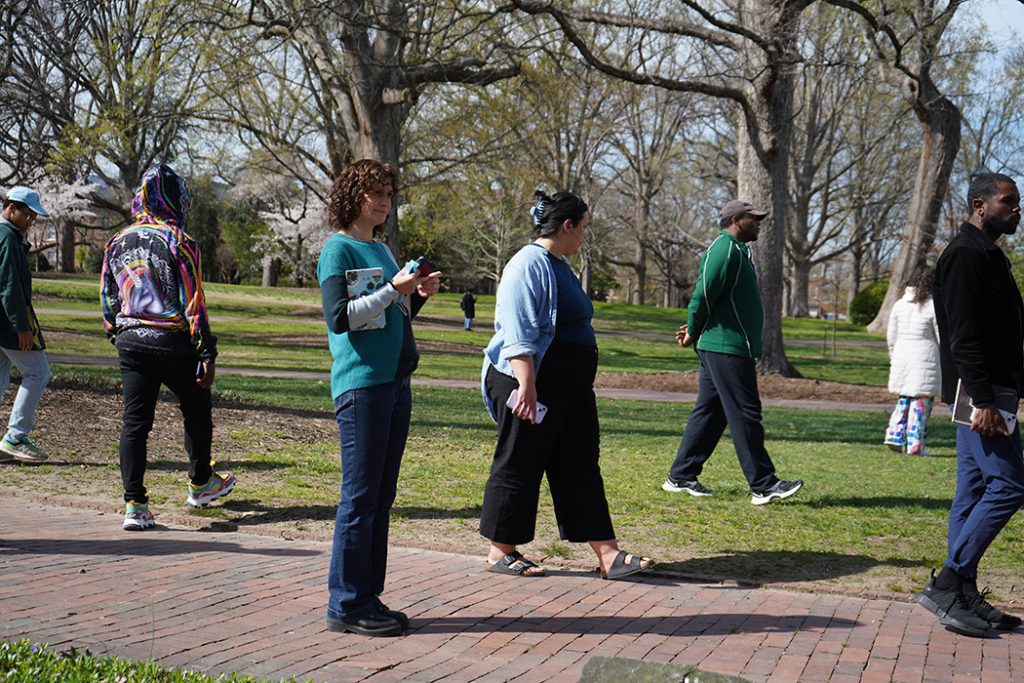
Social Geography brought together students (both undergraduate and graduate), the Eclipse Cohort, and Kathryn Wall—the Jackson Center’s Co-Director of Public History—for an experiment in true collaboration. The class took on the key challenge of social geography, which aims to extend the capacity of geographic research as a transformative force for intersectional justice. The class was held in spaces between Carolina Hall, CURRENT ArtSpace + Studio, and other spots on campus, including Gerrard Hall and the Old Well. The class culminated in a public Sound Walk around the Old Well and a facilitated listening circle practice with select community members.
Like Eclipse itself, the class focused on the bricks and masonry on campus, as well as the people who have maintained them. Members of the class helped to process existing data, and to possibly create new data, about how the campus was built by and sustained through shifting configurations of race and capital. The students conducted research in Wilson Library, processed Jackson Center oral histories of brick and stone masons, made a public website for the class, created teaching tools, and led the artists of the Eclipse Cohort in geography exercises like emotional mapping. In return, the Eclipse Cohort members shared the somatic and sonic practices they’d developed during Eclipse. Everyone in the class worked together to conduct collaborative scholarship within a broad, interdisciplinary community of people, and to explore how research and performance can disrupt the accepted histories of the landscape.
 `
`

"Well"
Watch an excerpt of the performance and social practice: "Well." This video is edited to both include the soundscape which was amplified live as well as to give a sense of the nuances of the site-specific work, which was intentionally subtle and therefore difficult to capture with video. Video produced by Culture Mill.
Meet the Social Geography Collaborators
 `
`
Creating Old Well Sound Scape
Social Geography culminated in a walking practice at the Old Well, the geographic and cultural heart of campus. Artist Caitlyn Swett combined class-collected field recordings of campus, student and Eclipse Cohort meditations, and Jackson Center oral histories by Black brickmakers and stonemasons to create a soundscape that blurred the past with the present, asking those who listened to see the campus in a new light.
Social Geography Resources
 `
`
Brick as Memory
UNC students created a website, offering insights into the Social Geography Class and their Old Well Sound Walk through student reflections, educational resources, and a glossary of terms.
-

Eclipse Cohort member Meg Stein and student Daniela Arias during an 'emotional mapping' exercise in from of the Old Well. -
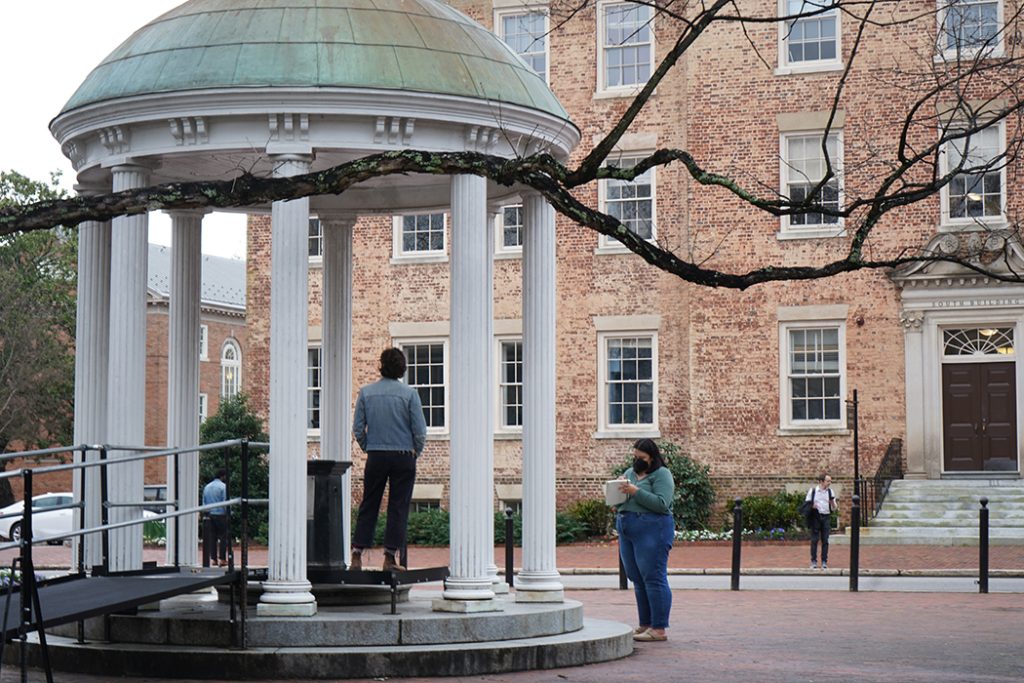
Eclipse Cohort member Caitlyn Swett and student Annie Elledge during an 'emotional mapping' exercise at the Old Well. -
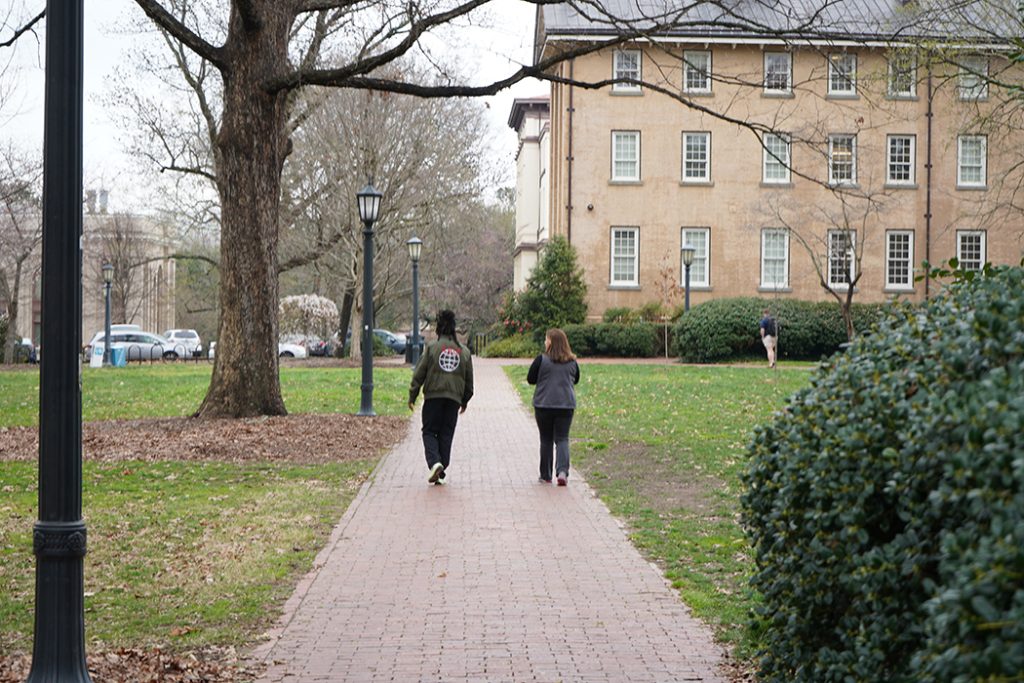
Eclipse Cohort member Lee Chapman and student Lindsey Jackson during an 'emotional mapping' exercise on McCorkle Place. -
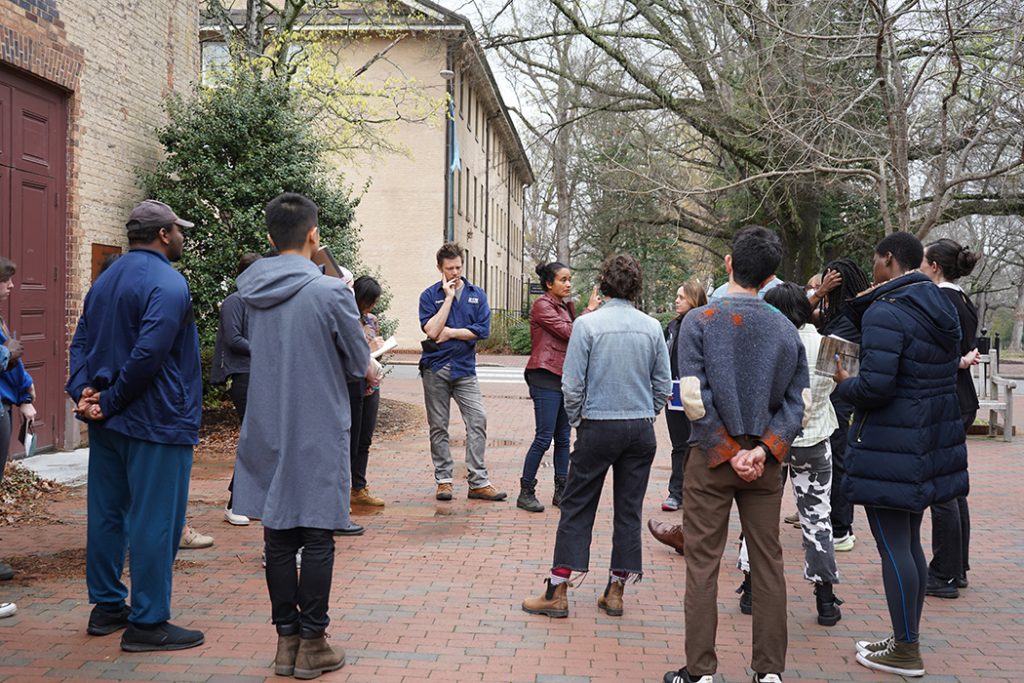
Murielle Elizéon gives instructions for a slow walk. -
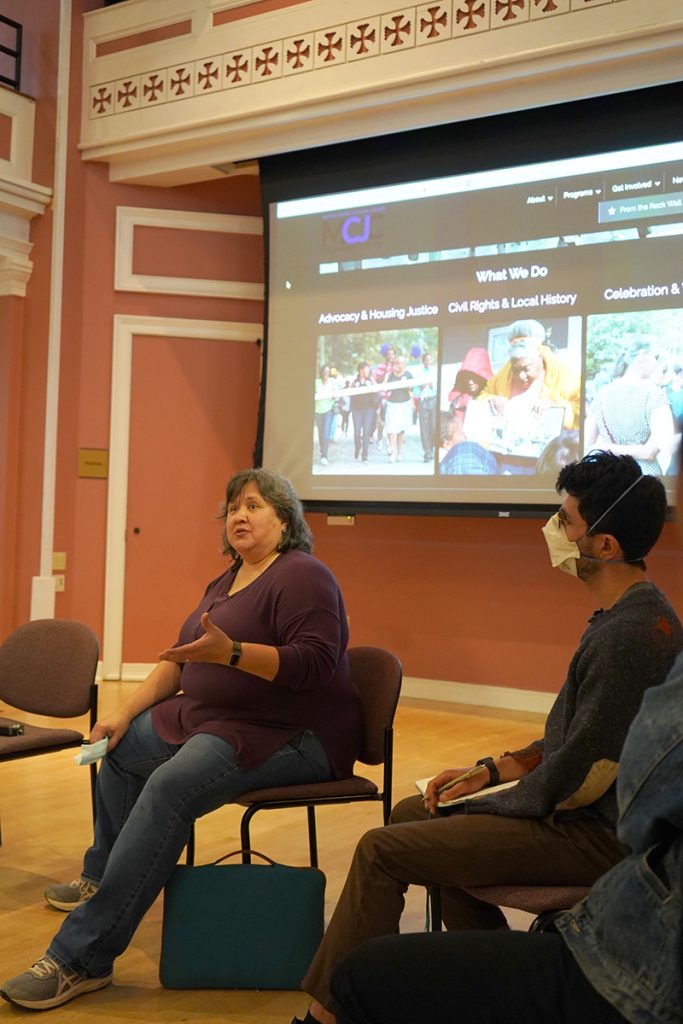
Kathryn Wall teaches the class and Cohort about the Jackson Center's From the Rock Wall, the online collection of oral histories from Northside neighborhood residents. -
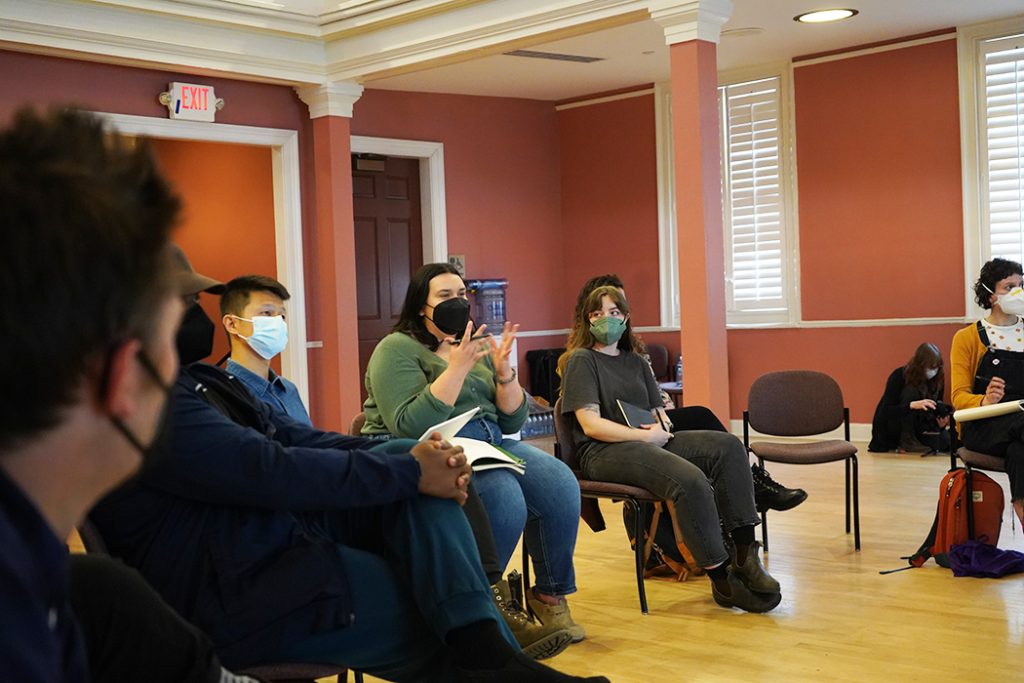
Annie Elledge shares information about campus architecture, slavery, and Black craftspeople. -
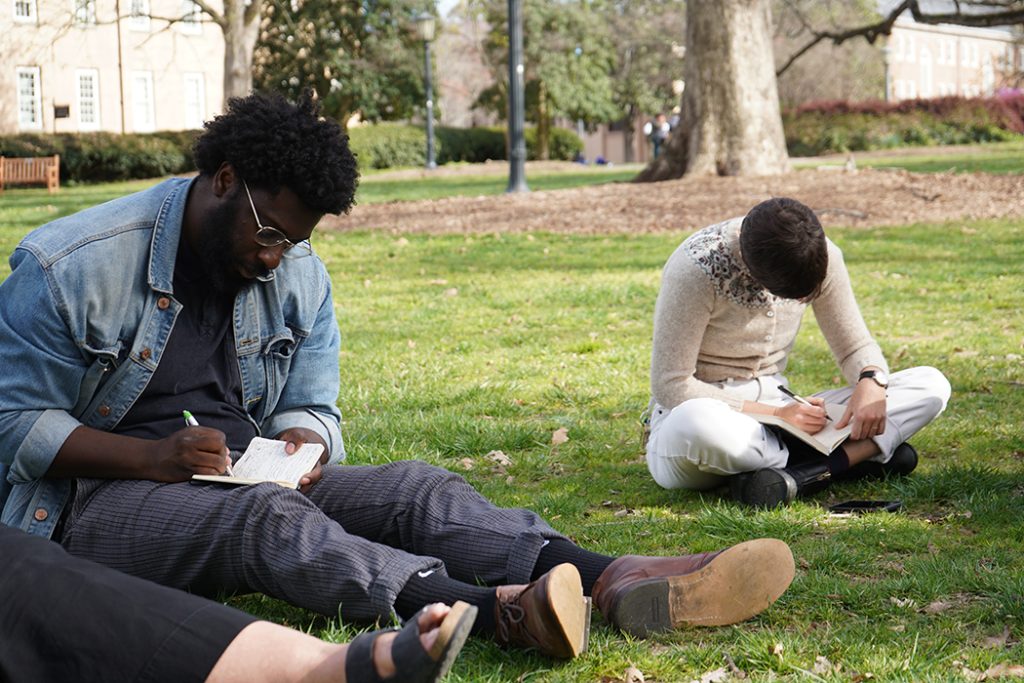
Cohort member Cortland Gilliam and student Leiha Edmonds take notes during a circle. -
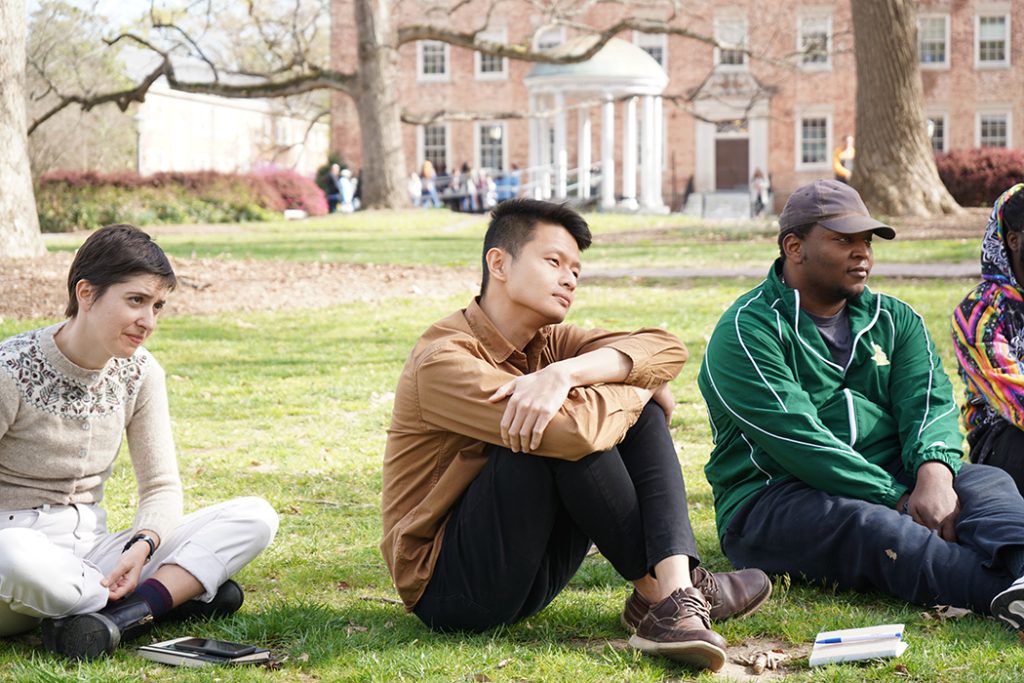
Students Leiha Edmonds, Yu-Hsiu Lien and Eclipse Cohort member Sylvester Allen Jr. in circle. -

Eclipse Cohort member Jasmine Powell speaks in circle.
More projects
-
100% The Triangle
Rimini Protokoll
-
Omar
Rhiannon Giddens, Kaneza Schaal
-
Eclipse
Culture Mill